Cisco ISR 4000 EOL Replacement Guide: Move to Catalyst 8000
Cisco ISR 4000 routers have been widely used in enterprise branches, regional offices, retail networks, banks, healthcare sites, and service provider edge deployments. But many ISR 4000 models have already entered End-of-Sale or EOL planning stages, and businesses now need a practical replacement path.
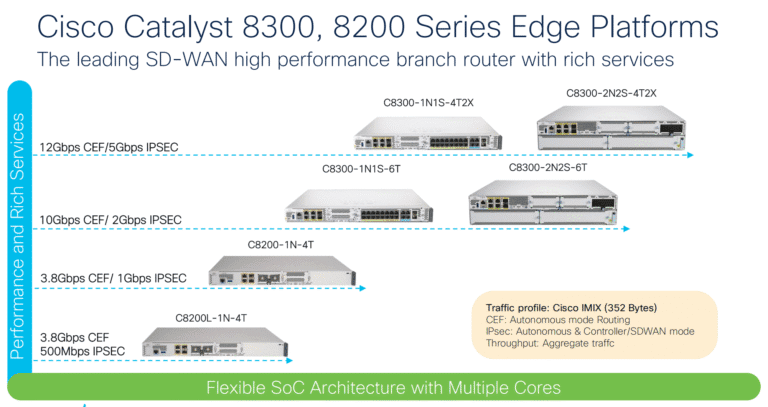
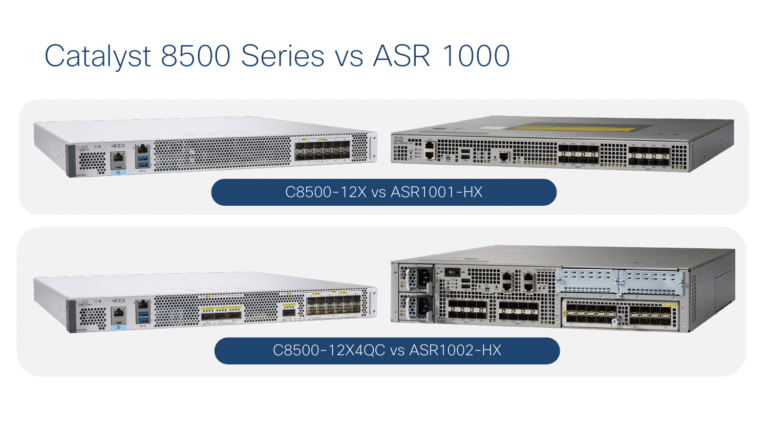
The most common replacement direction is the Cisco Catalyst 8000 Edge Platforms family. In many branch-router migration projects, ISR 4321 is typically mapped to C8200L or C8200, ISR 4331 and ISR 4351 are usually mapped to C8300, and larger ISR 4431 / ISR 4451 deployments may require C8300 or C8500 depending on throughput, interfaces, modules, licensing, and services.
This guide focuses on replacement planning and migration decisions, not only EOL date lookup. For exact EOL, EOS, and last-support dates of a specific Cisco part number, use our Cisco EOL lookup tool before final procurement.
Quick Answer: What Replaces Cisco ISR 4000?
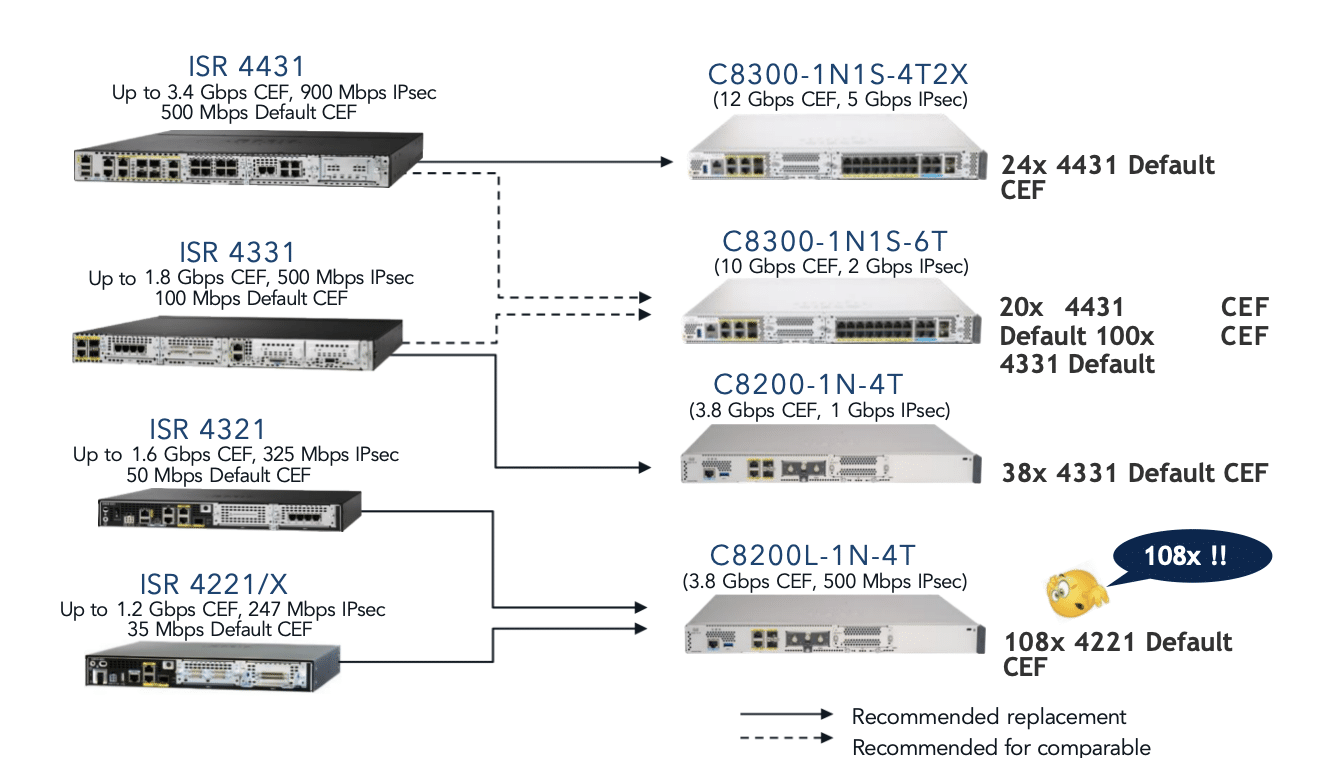
Cisco ISR 4000 routers are commonly replaced by Cisco Catalyst 8000 Edge Platforms. For many branch deployments, ISR 4321 maps to C8200L or C8200, ISR 4331 maps to C8300, ISR 4431 maps to higher C8300 models, and ISR 4451 or ISR 4461 may require C8300 or C8500 depending on performance and services.
A simple replacement rule is:
| Current Router | Check Before Replacement | Replacement Direction |
|---|---|---|
| ISR4321 | WAN speed, VPN load, branch size | C8200L / C8200 / C8300 if site has grown |
| ISR4331 | 1G vs 10G, modules, security services | C8300-1N1S-6T / C8300-1N1S-4T2X |
| ISR4431 | Throughput, WAN uplinks, aggregation role | C8300-1N1S-4T2X / C8300-2N2S-4T2X |
| ISR4451/4461 | High throughput, encryption, edge role | C8300 or C8500 |
Do not choose the replacement only by model number. Check actual throughput, WAN interfaces, installed modules, voice requirements, security services, SD-WAN plans, and license model before final selection.
If you already know your current ISR model and want to confirm the closest Catalyst 8000 replacement, you can send us your ISR model, installed modules, WAN bandwidth, and license requirements. Our team can help check suitable C8200, C8300, or C8500 options for your project.
If you are still comparing router families at a high level, your replacement plan should start with one practical question:
Is this site a small branch, a medium branch, a regional edge, or an aggregation edge?
That answer usually determines whether C8200, C8300, or C8500 is the right starting point.
Cisco ISR 4000 EOL Replacement Mapping Table
For most buyers, the fastest way to start is a replacement mapping table. The table below gives a practical first-pass direction, but it should not replace a real configuration review.
Before choosing a replacement, use our Cisco router comparison tool to compare the exact ISR and Catalyst models by WAN interfaces, IPsec throughput, expansion slots and memory.
| Current ISR 4000 Model | Replacement Direction | Recommended Catalyst 8000 Options | Best Fit |
|---|---|---|---|
| ISR4221 | Entry branch replacement | C8200L-1N-4T / C8200-1N-4T | Small branch, basic WAN edge |
| ISR4321 | Low-to-mid branch replacement | C8200L-1N-4T / C8200-1N-4T | Branch router, VPN, SD-WAN edge |
| ISR4331 | Mid-range branch replacement | C8300-1N1S-6T / C8300-1N1S-4T2X | Branch with higher throughput or module needs |
| ISR4351 | Mid-to-large branch replacement | C8300-1N1S-6T / C8300-2N2S-6T | More services, module expansion |
| ISR4431 | High branch / regional edge replacement | C8300-1N1S-4T2X / C8300-2N2S-4T2X | 10G WAN uplinks, higher headroom |
| ISR4451 | Higher-performance replacement | C8300 / C8500 depending on throughput | Large branch, aggregation, advanced services |
| ISR4461 | Higher-performance edge replacement | C8500 direction in many cases | High-performance WAN edge |
This table should be read as a planning guide, not as a universal one-to-one rule. A lightly loaded ISR4431 may not need the same replacement as an ISR4431 running heavy VPN, security, voice, and application services. Likewise, an ISR4321 site that has grown over time may be better served by C8300 instead of C8200.
For exact lifecycle status, check the exact PID first with our Cisco EOL lookup tool. If the router is already in your replacement plan, you can also request a Catalyst 8000 replacement quote based on the current ISR model and required interface modules.
Why ISR 4000 Is Moving to Catalyst 8000
ISR 4000 routers were built for enterprise branch routing, WAN connectivity, voice, security, and application services. They became common in branch offices because they offered modular interfaces, strong routing capability, and service flexibility.
But enterprise WAN design has changed.
Modern branch networks now need stronger support for:
- SD-WAN
- Cloud access
- SaaS traffic
- Higher WAN throughput
- More flexible internet edge designs
- Centralized policy control
- Secure branch connectivity
- LTE/5G backup
- Smart licensing and subscription-based feature models
That is where Catalyst 8000 becomes the natural replacement direction.
The issue is not that every ISR 4000 must be removed immediately. The issue is that new branch projects, multi-year support planning, SD-WAN expansion, and cloud-edge designs should no longer be built around an EOL platform.
The migration is not only a hardware refresh. It is a platform change from ISR 4000 branch routing to a newer enterprise edge architecture. This matters because the new platform may change licensing, performance expectations, interface choices, management model, and SD-WAN readiness.
For existing ISR 4000 users, the real question is not only:
Is my ISR 4331 EOL?
The better question is:
What should replace this router without breaking WAN connectivity, voice services, licensing, modules, or branch operations?
That is why the replacement decision should include model mapping, license planning, module review, and migration checklist—not just EOL status.
ISR 4321, 4331 and 4431 Replacement Options
The three most searched ISR 4000 replacement questions usually involve ISR4321, ISR4331, and ISR4431. These models were widely deployed, but they do not map to the same Catalyst 8000 model.
Cisco ISR 4321 Replacement
ISR4321 is usually found in small and mid-size branch environments. It may support WAN routing, VPN, basic security services, and branch connectivity.
Common replacement options include:
| Replacement Option | When to Choose |
|---|---|
| C8200L-1N-4T | Cost-sensitive branch, moderate WAN performance, simpler edge needs |
| C8200-1N-4T | More flexible branch edge with stronger expansion needs |
| C8300 | When the ISR4321 site has grown beyond its original branch role |
Choose C8200L or C8200 when the site is still a relatively light branch. Choose C8300 if the branch now needs more throughput, more services, more module flexibility, or longer lifecycle headroom.
A common mistake is replacing ISR4321 with the cheapest available model without checking current WAN bandwidth, encrypted traffic, and future SD-WAN requirements. If the branch has grown since the original ISR4321 deployment, the replacement should reflect the current site role, not only the old router name.
Cisco ISR 4331 Replacement
ISR4331 is one of the most common ISR 4000 models, so its replacement choice matters. In many cases, the right direction is C8300.
| Replacement Option | When to Choose |
|---|---|
| C8300-1N1S-6T | Mostly 1G WAN, balanced branch services, cost-conscious upgrade |
| C8300-1N1S-4T2X | Need 10G uplinks, more throughput headroom, stronger future-proofing |
| C8300-2N2S-4T2X | Larger branch, more module flexibility, more complex WAN edge |
If the ISR4331 was used only as a basic branch router, C8300-1N1S-6T may be enough. If the site needs 10G uplinks, stronger SD-WAN readiness, or more growth room, C8300-1N1S-4T2X is often a better direction.
For ISR4331 replacement projects, the most useful quote request usually includes the current ISR4331 PID, active WAN links, NIM modules, VPN/security usage, and whether 10G uplinks are required. You can send these details to Layer23-Switch to check suitable C8300 options and availability.
For many procurement teams, ISR4331 replacement is the most important decision point because it sits between entry branch routing and larger WAN edge requirements. Choosing too small a replacement can create a second upgrade problem later.
Cisco ISR 4351 Replacement
ISR4351 is usually a stronger branch router than ISR4321/4331 and may support more services, higher traffic, and more module requirements.
Common replacement options include:
| Replacement Option | When to Choose |
|---|---|
| C8300-1N1S-6T | Branch replacement with mostly 1G WAN needs |
| C8300-2N2S-6T | More module flexibility and branch services |
| C8300-1N1S-4T2X | If the site needs 10G uplinks or more headroom |
Cisco ISR4351 replacement should not be treated as “just another ISR4331 upgrade.” Review VPN, security features, voice gateway usage, NIM modules, WAN speed, and branch size before choosing the final C8300 configuration.
Cisco ISR 4431, 4451 and 4461 Replacement
ISR4431, ISR4451, and ISR4461 require more careful review. These routers may have been used in larger branches, regional WAN hubs, voice gateways, VPN aggregation, or service-heavy deployments.
| Current Model | Replacement Direction | Notes |
|---|---|---|
| ISR4431 | C8300-1N1S-4T2X / C8300-2N2S-4T2X | Good fit for higher branch WAN edge |
| ISR4451 | C8300 or C8500 | Depends heavily on throughput, services, and modules |
| ISR4461 | Often C8500 direction | Review performance and interface requirements carefully |
For ISR4451 and ISR4461, do not select only by chassis generation. Review real traffic, encrypted throughput, WAN link speed, module usage, voice needs, and future SD-WAN or cloud edge requirements.
If the existing ISR4451 or ISR4461 is acting like a regional aggregation router, C8500 may be more appropriate than a branch-focused C8300.
ISR 4000 vs Catalyst 8000: What Actually Changes?
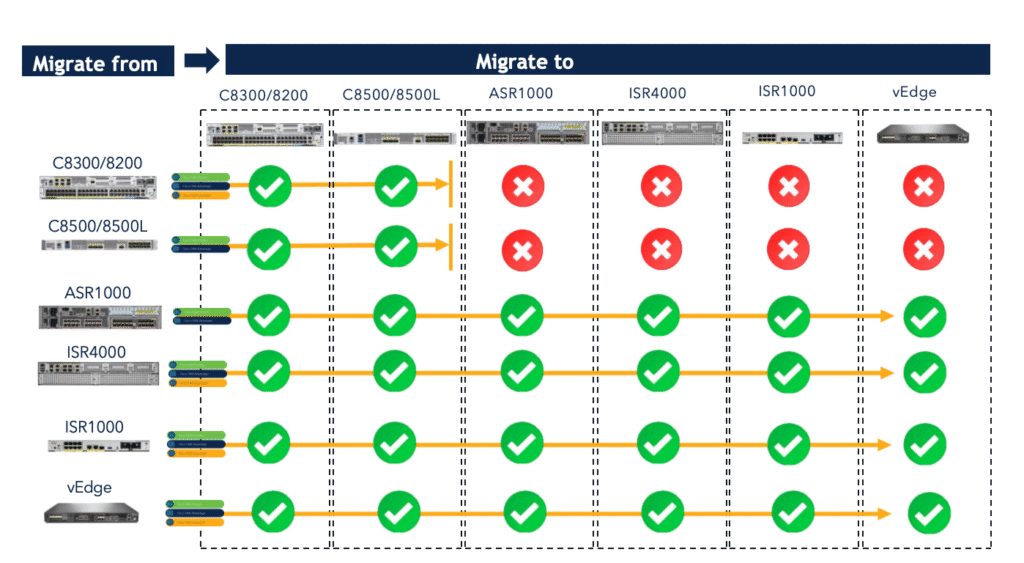
Moving from ISR 4000 to Catalyst 8000 is not just swapping an old router for a new router. Several things may change in the design.
| Area | ISR 4000 | Catalyst 8000 |
|---|---|---|
| Platform generation | ISR 4K enterprise branch platform | Newer enterprise edge platform |
| Replacement role | Existing branch router | Modern branch, SD-WAN, cloud edge |
| SD-WAN readiness | Supported depending on model/software | Stronger fit for modern SD-WAN designs |
| Licensing | Older ISR licensing model | Catalyst Routing / DNA-style licensing model |
| Performance planning | Depends heavily on license and enabled services | More modern performance tiers and edge options |
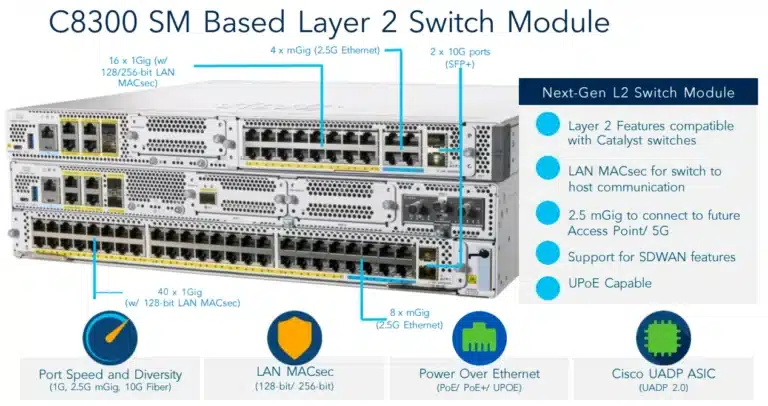
| Interfaces | NIM / SM / onboard ports | Newer onboard and modular options |
| Cloud access | Possible | Better aligned with cloud and SaaS traffic patterns |
| Lifecycle planning | Many ISR 4K models are in EOL/EOS planning | Current replacement direction |
Licensing and Smart Account Changes
Licensing is one of the most overlooked migration issues.
A Catalyst 8000 replacement may require planning around:
- Cisco DNA or subscription terms
- Catalyst Routing Essentials or Advantage
- SD-WAN vs autonomous mode
- Smart Account ownership
- Support contract
- Feature entitlement
- Throughput and security service requirements
Do not assume an ISR 4000 license can be directly reused on Catalyst 8000. In many projects, licensing is part of the replacement BOM, not an afterthought.
For procurement, this means the replacement quote should include both the hardware and the correct software/license/support items. Otherwise, the router may arrive but not match the required deployment mode.
Autonomous Routing vs SD-WAN Mode
Another migration question is whether the new Catalyst 8000 router will run in traditional routing mode or be part of an SD-WAN architecture.
This affects:
- Software image
- Licensing
- Controller requirements
- Smart Account planning
- Configuration migration
- Operational workflow
- Support and lifecycle planning
If the site is currently running ISR 4000 as a traditional branch router but the company plans to adopt SD-WAN later, choose the replacement platform with that future direction in mind.
C8200 vs C8300 vs C8500: Which Catalyst 8000 Should You Choose?
The Catalyst 8000 family includes different platforms for different branch and edge roles. The most common mistake is choosing the replacement only by price.
A better approach is to choose by site role, throughput, interface needs, and future growth.
| Catalyst 8000 Platform | Best Replacement For | Typical Use |
|---|---|---|
| C8200L | ISR4221 / light ISR4321 | Small branch, cost-sensitive WAN edge |
| C8200 | ISR4321 / small ISR4331 | Branch edge with moderate performance needs |
| C8300-1N1S-6T | ISR4331 / ISR4351 | 1G WAN branch replacement |
| C8300-1N1S-4T2X | ISR4331 / ISR4431 | 10G WAN uplinks, more headroom |
| C8300-2N2S-4T2X | ISR4431 / larger ISR4351 | More module flexibility and larger branch role |
| C8500 | ISR4451 / ISR4461 / aggregation edge | Higher-performance edge, larger WAN sites |
For a deeper model-by-model selection guide, see our Cisco Catalyst 8000 Series router comparison.
When C8200 Is Enough
Choose C8200 or C8200L when the site is a smaller branch with moderate WAN needs, limited module requirements, and no major performance growth planned.
Typical examples:
- Small office branch
- Basic WAN edge
- Moderate VPN use
- Cost-sensitive replacement
- ISR4321 replacement with similar scope
When C8300 Is the Better Fit
Choose C8300 when the branch needs higher throughput, more module flexibility, stronger SD-WAN readiness, or 10G WAN uplinks.
Typical examples:
- ISR4331 replacement
- ISR4351 replacement
- Larger branch office
- More security services
- More WAN interfaces
- Need for 10G uplink options
When C8500 Should Be Considered
Choose C8500 when the site is closer to an aggregation edge or high-performance WAN edge instead of a simple branch.
Typical examples:
- ISR4451 replacement with high traffic
- ISR4461 replacement
- Regional WAN hub
- High encrypted throughput
- More demanding edge services
- Higher-performance cloud or SD-WAN edge
Voice, Modules and Interface Migration
This is where many ISR 4000 migration projects become more complicated than expected.
ISR 4000 routers often use modules and services that cannot be ignored:
- NIM modules
- Voice modules
- T1/E1 interfaces
- Serial interfaces
- FXS / FXO ports
- PVDM resources
- LTE modules
- Security services
- VPN configurations
- QoS policies
- Routing protocols
- Local branch services
Before choosing a Catalyst 8000 replacement, review what the ISR 4000 is actually doing.
| Migration Item | Why It Matters |
|---|---|
| WAN interfaces | Determines whether C8200, C8300, or C8500 is needed |
| 1G vs 10G uplinks | Can change the recommended replacement model |
| Voice modules | May require redesign or different hardware planning |
| T1/E1 or serial circuits | Legacy interfaces may need special review |
| NIM compatibility | Not every existing module should be assumed reusable |
| VPN throughput | Encrypted traffic may drive platform choice |
| SD-WAN plan | Can affect licensing and deployment mode |
| Power and rack space | Important for branch refresh planning |
| Support contract | New hardware may require updated service coverage |
For ISR 4000 sites running voice gateway functions, do not treat the migration as a simple router swap. Voice interfaces, dial peers, DSP resources, survivability requirements, and carrier circuits should be reviewed before ordering replacement hardware.
For sites with legacy WAN circuits, verify whether the same circuit type will remain or whether the WAN connection should be modernized during the migration.
For module-heavy ISR4000 sites, it is better to quote the replacement as a full bundle: router chassis, NIM or interface modules, optics, power options, licenses, and support. Share your current module list if you need help building a compatible Catalyst 8000 replacement BOM.
Questions to Ask Before Reusing Modules
Before assuming any ISR 4000 module can move forward, ask:
- Is this module still supported on the target Catalyst 8000 platform?
- Is there a newer replacement module?
- Is the circuit still required?
- Is voice still handled locally, or has it moved to cloud calling?
- Does the new router need the same physical interfaces?
- Would a WAN service redesign reduce module dependency?
- Does the replacement router need more slots or a different chassis?
This section is where many migrations fail if the project is treated as a simple chassis swap.
ISR 4000 to Catalyst 8000 Migration Checklist
Use this checklist before finalizing the replacement BOM.
- Identify the exact ISR model and PID
Do not rely only on “ISR 4000.” Check the exact model, such as ISR4321, ISR4331, ISR4431, or ISR4451. - Check lifecycle status
Confirm EOL, EOS, last order, and last support dates for the exact part number. - Export the current configuration
Save routing, interface, VPN, NAT, QoS, voice, AAA, and security configuration. - List all installed modules
Include NIMs, voice modules, WAN modules, LTE modules, and any legacy interface cards. - Check real throughput and services
Review current WAN bandwidth, encrypted traffic, security features, and application usage. - Decide C8200, C8300 or C8500
Match the replacement platform to site role, throughput, modules, and future growth. - Review licensing and Smart Account needs
Confirm Catalyst Routing, DNA, SD-WAN, support, and Smart Account requirements. - Validate module and interface migration
Do not assume all ISR 4000 modules can move directly to Catalyst 8000. - Plan voice migration carefully
If the ISR 4000 is used as a voice gateway, review dial plan, DSP, analog/digital circuits, and survivability. - Prepare cutover and rollback
Schedule downtime, prepare console access, keep old router available, and document rollback steps. - Update monitoring and documentation
Update IP plans, diagrams, monitoring systems, asset records, and support contract records.
A successful migration is not only about choosing a newer router. It is about preserving branch connectivity while improving lifecycle, performance, and long-term support.
If you are planning a real ISR 4000 to Catalyst 8000 migration, prepare the current configuration, installed modules, WAN bandwidth, license requirements, and expected support term before requesting a replacement quote. This allows Layer23-Switch to recommend a practical C8200, C8300, or C8500 option instead of only matching the old router model name.
Should You Still Buy ISR 4000 or Move to Catalyst 8000?
There are still cases where buying an ISR 4000 can make sense, especially for short-term replacement, spare stock, urgent RMA-like scenarios, or environments that need the exact same platform for consistency.
But for new projects and long lifecycle planning, Catalyst 8000 is usually the better direction.
| Situation | Recommendation |
|---|---|
| Existing ISR 4000 is stable | Keep temporarily, but plan replacement |
| New branch deployment | Choose Catalyst 8000 |
| Need long lifecycle | Choose Catalyst 8000 |
| Urgent same-model replacement | ISR 4000 may be acceptable short term |
| Compliance or support risk | Move to Catalyst 8000 |
| Need SD-WAN / cloud edge | Choose Catalyst 8000 |
| Need exact module continuity | Review ISR 4000 vs Catalyst 8000 compatibility carefully |
| Budget is limited | Consider phased replacement |
A practical approach is to keep stable ISR 4000 routers during a planned transition period, but avoid building new long-term branch architecture around EOL platforms.
For buyers, the decision usually comes down to:
- How long the site must remain in service
- Whether support coverage is required
- Whether SD-WAN or cloud access is planned
- Whether legacy modules must be preserved
- Whether the router is for temporary replacement or long-term deployment
- Whether the business wants to standardize on Catalyst 8000
Before requesting a quote, prepare the current ISR model, installed modules, WAN bandwidth, required licenses, support expectations, and whether the site will run SD-WAN or autonomous routing.
That information helps suppliers and engineers recommend the correct C8200, C8300, or C8500 configuration instead of giving a generic replacement.
In some urgent projects, buyers still need ISR4000 units as short-term replacements or spare stock. In that case, confirm remaining support expectations, condition, warranty, and exact PID before purchase. For long-term projects, Catalyst 8000 is usually the safer procurement direction. Contact Layer23-Switch if you need help comparing available ISR4000 stock with Catalyst 8000 replacement options.
FAQ About ISR 4000 Replacement
What replaces Cisco ISR 4331?
Cisco ISR 4331 is commonly replaced by Cisco Catalyst 8300 models such as C8300-1N1S-6T or C8300-1N1S-4T2X. The right choice depends on WAN throughput, interface requirements, modules, services, and whether the site needs 10G uplinks or more growth headroom.
What replaces Cisco ISR 4321?
Cisco ISR 4321 is commonly replaced by C8200L-1N-4T or C8200-1N-4T for smaller branch deployments. If the branch has grown beyond the original ISR4321 role, C8300 may be a better choice.
What replaces Cisco ISR 4351?
Cisco ISR4351 is commonly replaced by Cisco Catalyst 8300 models such as C8300-1N1S-6T or C8300-2N2S-6T. The right model depends on throughput, NIM modules, WAN interfaces, VPN, security services, and future SD-WAN requirements.
Is Cisco ISR 4000 EOL?
Many ISR 4000 models have entered End-of-Sale or EOL planning stages. Exact dates depend on the specific part number. For precise EOL and EOSL information, check the exact ISR model and PID before making a procurement or support decision.
Is C8300 the replacement for ISR 4331?
In many branch scenarios, yes. C8300 is a common replacement direction for ISR4331, especially when the site needs more throughput, better SD-WAN readiness, or 10G WAN uplink options. However, C8200 may be enough for lighter sites, and larger sites may need a higher C8300 configuration.
Is Cisco ISR 4000 still supported?
Some ISR 4000 models may still be supported depending on the exact PID and lifecycle date, but many ISR 4000 platforms are already in EOL or End-of-Sale planning. For new projects or long-term support planning, Catalyst 8000 is usually the safer direction.
Where can I check the exact EOL date for my ISR model?
Use a Cisco EOL lookup process or search by exact PID, not only the family name. For example, check the exact ISR4321, ISR4331, ISR4431, or ISR4451 part number before deciding whether to keep, replace, or purchase spare hardware.
Can I reuse ISR 4000 modules on Catalyst 8000?
Do not assume every ISR 4000 module can be reused. Module compatibility depends on the exact NIM, interface type, Catalyst 8000 platform, and software support. Review module requirements before ordering replacement hardware.
What is the best replacement for ISR4431?
ISR4431 is often replaced by C8300-1N1S-4T2X or C8300-2N2S-4T2X, depending on interface needs and throughput. If the deployment is closer to aggregation or high-performance edge, C8500 may be considered.
How should I request a quote for an ISR 4000 replacement?
To request a useful ISR 4000 replacement quote, provide the current ISR model, exact PID, installed modules, WAN bandwidth, voice requirements, license needs, preferred support term, and whether the new router will run SD-WAN or autonomous routing. This helps suppliers recommend the right C8200, C8300, or C8500 model instead of only matching the old chassis.
Should I still buy ISR 4331?
For urgent same-model replacement or short-term spare needs, ISR4331 may still be useful if available and supported in your environment. For new deployments or long lifecycle planning, Catalyst 8000 is usually the better direction.
Final Recommendation: How to Plan Your ISR 4000 Replacement
If you are replacing an ISR4321, start with C8200L or C8200. If you are replacing an ISR4331 or ISR4351, start with C8300. If you are replacing ISR4431, ISR4451, or ISR4461, review C8300 and C8500 based on throughput, modules, services, and future WAN design.
The best ISR 4000 replacement is not always the closest model by name. It is the platform that matches your real branch requirements: WAN speed, VPN throughput, SD-WAN mode, licensing, module needs, voice services, and support lifecycle.
For businesses planning ISR 4000 replacement, C8200/C8300/C8500 upgrades, or branch router refresh projects, Layer23-Switch can help source Cisco routers, modules, optics, licenses, and related enterprise network hardware for global B2B deployments.
If you are not sure which Catalyst 8000 model should replace your ISR4321, ISR4331, ISR4431, or ISR4451, send us your current model, module list, WAN bandwidth, and license requirements. We can help check a practical replacement direction and current availability.