WAN Examples: 5 Simple + 10 Real-World Examples of a WAN
A WAN example is any network that connects users, offices, LANs, data centers, or cloud services across large geographic areas. The Internet is the largest WAN example. In business networks, common WAN examples include branch-office networks, bank ATM networks, retail store networks, university multi-campus networks, cloud-connected enterprise networks, and SD-WAN deployments.
A WAN, or wide area network, is different from a LAN because it connects networks beyond one local space. A LAN usually stays inside a home, office, classroom, warehouse, or campus. A WAN connects those local networks to other locations, service providers, cloud platforms, or remote users.
The important point is this:
A network is not a WAN just because it uses the internet. It becomes a WAN when it connects separate locations, users, LANs, data centers, or cloud services over a wide area.
Quick Answer: What Is an Example of a WAN?
The Internet is the largest and most common example of a WAN. Other WAN examples include corporate branch-office networks, bank ATM networks, university multi-campus networks, retail store networks, cloud-connected enterprise networks, and SD-WAN deployments. A network is considered a WAN when it connects users, LANs, offices, data centers, or cloud services across large geographic areas.
What is an example of a WAN? The internet is the most common example of a WAN — a wide area network that links networks across cities and countries. 5 simple examples of a WAN:
- The internet
- A bank’s branch offices and ATM network
- A retail chain’s multi-store network
- A university’s multi-campus network
- A company’s SD-WAN connecting sites over the internet
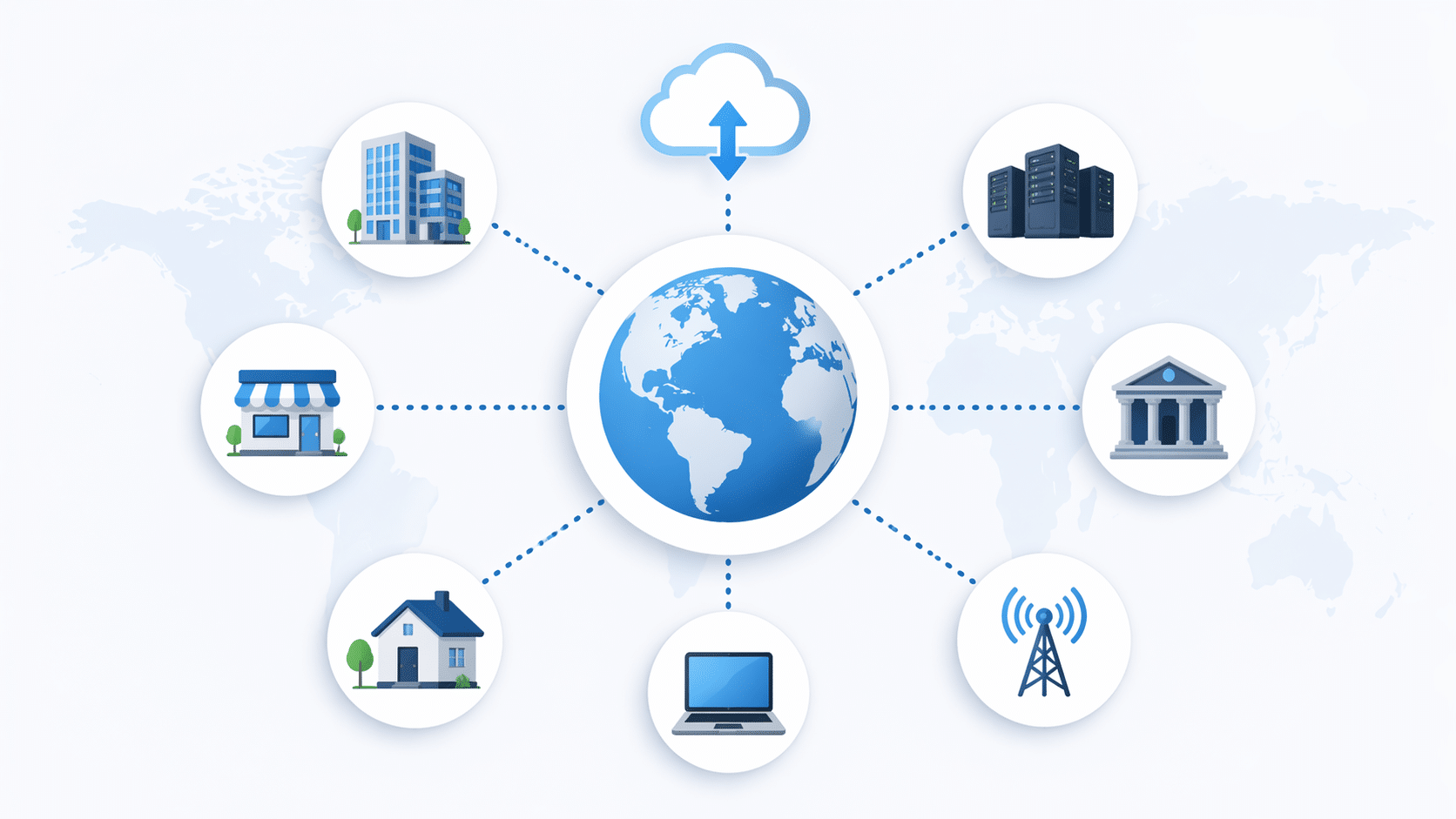
For a beginner, the Internet is the clearest example. For an enterprise network team, a WAN is usually the infrastructure that connects headquarters, branch offices, data centers, cloud services, security systems, and remote users.
What Makes a Network a WAN?
A network becomes a WAN when it connects multiple locations, systems, or local networks across a wide geographic area.
A WAN can connect:
- Multiple LANs
- Branch offices and headquarters
- Users and data centers
- Retail stores and central systems
- ATMs and bank data centers
- Hospitals and shared medical platforms
- Campuses in different locations
- Offices and cloud services
- Remote users and corporate applications
The key point is scope. A network inside one home, office, classroom, or building is usually a LAN. A network that connects different sites, cities, regions, countries, or cloud environments is usually a WAN.
| Network | Is It a WAN? | Why |
|---|---|---|
| The Internet | Yes | Connects networks globally |
| Office Wi-Fi | No | Usually local LAN access |
| One office network | Usually no | Limited to one building or campus |
| Branch office to headquarters | Yes | Connects different business locations |
| University multi-campus network | Yes | Connects separate campuses |
| Remote worker VPN | Part of WAN access | Connects users to corporate resources over distance |
| Cloud access network | Yes | Connects sites or users to cloud platforms |
A useful test is simple:
If the network connects different locations, remote users, data centers, or cloud services over a large area, it is likely a WAN example.
10 Real-World WAN Examples
WAN examples are not limited to textbook definitions. In real networks, WANs support businesses, banks, schools, hospitals, government offices, cloud applications, and global internet access.
Here is a quick overview before the detailed explanations:
| # | WAN Example | Why It Is a WAN |
|---|---|---|
| 1 | The Internet | Connects networks globally |
| 2 | Corporate branch office WAN | Connects offices across locations |
| 3 | Bank branch and ATM network | Connects ATMs, branches, and data centers |
| 4 | Retail store WAN | Connects stores to headquarters and business systems |
| 5 | University multi-campus WAN | Connects separate campuses |
| 6 | Hospital or healthcare group WAN | Connects hospitals, clinics, and shared medical systems |
| 7 | Government or public sector WAN | Connects public offices, agencies, and data centers |
| 8 | Data center interconnect | Connects data centers across locations |
| 9 | Cloud-connected enterprise WAN | Connects sites and users to cloud platforms |
| 10 | SD-WAN deployment | Connects multiple sites through software-defined WAN policies |
1. The Internet
The Internet is the largest example of a WAN.
It connects users, devices, websites, cloud platforms, data centers, service providers, and networks across the world. When you open a website hosted in another country, access a cloud application, send an email, or connect to a remote server, you are using a global wide area network.
The Internet is a WAN because it connects many smaller networks across large geographic areas. These smaller networks may include home LANs, office LANs, university networks, data center networks, service provider networks, and mobile networks.
Common technologies behind the Internet include fiber links, ISP backbones, routing systems, submarine cables, wireless links, and data center interconnections.
For students and beginners, the Internet is the simplest answer to the question: “What is an example of a WAN?”
2. Corporate Branch Office WAN
A corporate branch office WAN connects a company’s headquarters, branch offices, data centers, and cloud services.
For example, a company may have headquarters in New York, branch offices in London and Singapore, and a data center in Frankfurt. These locations need to share business applications, files, voice services, ERP systems, security policies, and cloud access. That connection is a WAN.
This is one of the most common enterprise WAN examples.
Typical technologies include:
- MPLS
- Broadband internet
- IPsec VPN
- SD-WAN
- Leased lines
- 4G/5G backup links
Common devices include WAN routers, firewalls, SD-WAN edge devices, Layer 3 switches, optical modules, and ISP CPE devices.
A corporate branch WAN is usually designed for reliability, security, centralized management, and consistent application performance across sites. In practical terms, this is where a simple WAN concept becomes a real enterprise infrastructure project.
3. Bank Branch and ATM Network
A bank branch and ATM network is another classic WAN example.
Banks need to connect branch offices, ATMs, payment systems, central banking applications, fraud detection platforms, and data centers. These locations are often spread across cities, regions, or countries, so the network must work across a wide geographic area.
This is a WAN because the network connects distributed endpoints to central systems.
For example:
- ATMs communicate with bank data centers.
- Branch offices access core banking systems.
- Payment terminals connect to transaction platforms.
- Backup links keep banking services available during outages.
Bank WANs usually require strong security, encryption, redundancy, low latency, and strict access control. Technologies may include MPLS, private lines, VPN, SD-WAN, and cellular backup.
This example is especially useful because it shows that a WAN is not just “the Internet.” A private business network spread across many locations can also be a WAN.
4. Retail Store WAN
A retail store WAN connects multiple store locations to headquarters, inventory systems, payment gateways, cloud services, and data centers.
For example, a retail chain may have 200 stores across different cities. Each store needs access to POS systems, stock databases, payment processing, employee systems, video surveillance, and cloud applications. This multi-site connection is a WAN.
Retail WANs often use:
- Broadband internet
- SD-WAN
- LTE/5G backup
- IPsec VPN
- Cloud security services
- Firewalls at each branch
This type of WAN must be reliable because a network outage can affect checkout systems, payment processing, inventory updates, and customer service.
A retail store WAN is a strong real-world example because it connects daily business operations across many physical locations. It also shows why many modern WAN designs combine cost-effective broadband with backup links and centralized security policies.
5. University Multi-Campus WAN
A university multi-campus network can be a WAN when it connects separate campuses, research centers, libraries, student systems, cloud platforms, and data centers.
A single classroom network or one campus network is usually a LAN or campus network. But when a university connects multiple campuses in different parts of a city, region, or country, it becomes a WAN example.
A university WAN may support:
- Student information systems
- Online learning platforms
- Research databases
- Library systems
- Video conferencing
- Shared data centers
- Cloud-based education tools
- Campus security systems
This example is helpful because it shows the difference between LAN and WAN clearly.
A network inside one campus is usually local. A network connecting multiple campuses is wide area.
6. Hospital or Healthcare Group WAN
A hospital group WAN connects hospitals, clinics, imaging centers, laboratories, data centers, and cloud-based healthcare systems.
In practice, this becomes a WAN because hospitals, clinics, imaging centers, and shared systems are no longer inside one local network. They may be spread across a city, region, or country, but they still need secure and reliable access to the same medical platforms.
A healthcare WAN may support:
- Electronic medical records
- Imaging systems
- Appointment platforms
- Billing systems
- Pharmacy systems
- Laboratory systems
- Telemedicine applications
- Shared cloud platforms
Healthcare WANs usually need high availability, strong security, network segmentation, firewall protection, encrypted site-to-site connectivity, and reliable backup links.
For example, a hospital in one city may need to access imaging data stored in another data center. Clinics may need to connect to a central electronic health record system. Remote specialists may need secure access to patient information.
This kind of WAN must be designed carefully because downtime can affect critical services.
7. Government or Public Sector WAN
A government or public sector WAN connects agencies, public offices, service centers, data centers, and secure applications across multiple locations.
For example, a government department may need to connect local offices, regional headquarters, data centers, public service counters, and cloud platforms. These locations may be spread across a city, state, or country.
This is a WAN because it connects separate networks over a wide area.
Public sector WANs often focus on:
- Security
- Access control
- Centralized management
- High availability
- Compliance
- Segmentation between departments
- Reliable connectivity for public services
Common technologies may include MPLS, private circuits, encrypted VPNs, SD-WAN, and dedicated internet links.
This example is useful because it shows how WANs support large organizations with distributed locations and strict security requirements.
8. Data Center Interconnect
A data center interconnect is a WAN example when it connects two or more data centers across different locations.
For example, an enterprise may operate one primary data center and one disaster recovery data center in another city. These data centers need to exchange data, replicate systems, support backup, and maintain business continuity.
This is a WAN because it connects data center networks across a wide geographic area.
Common use cases include:
- Disaster recovery
- Data replication
- Backup traffic
- High availability
- Workload migration
- Business continuity
- Multi-site application hosting
Common technologies include dedicated fiber, Ethernet WAN, private lines, wavelength services, MPLS, and high-speed optical links.
A data center interconnect is usually more performance-sensitive than a basic branch WAN. It may require high bandwidth, low latency, reliable routing, and strong security.
9. Cloud-Connected Enterprise WAN
A cloud-connected enterprise WAN connects offices, branches, remote users, and data centers to cloud platforms and SaaS applications.
Modern WANs do not only connect physical offices. They also connect users and sites to services such as AWS, Microsoft Azure, Google Cloud, Microsoft 365, Salesforce, ERP systems, CRM tools, and other SaaS platforms.
This is a WAN because the network connects business users and sites to applications across external cloud environments.
Common cloud WAN connections include:
- Site-to-site VPN to cloud
- Dedicated cloud connections
- SD-WAN cloud access
- Secure web gateways
- SASE or SSE platforms
- Direct cloud connectivity services
A cloud-connected WAN is especially important for modern enterprises because many applications no longer live in a private data center. They are distributed across public cloud, SaaS, and hybrid environments.
This is one reason modern WAN design is more complex than older point-to-point branch networking. The WAN now has to support branch users, cloud workloads, SaaS traffic, remote access, and security inspection at the same time.
10. SD-WAN Deployment Across Multiple Sites
An SD-WAN deployment across multiple sites is a modern enterprise WAN example.
SD-WAN connects branches, headquarters, data centers, cloud platforms, and remote users using multiple types of links. These may include MPLS, broadband internet, LTE/5G, dedicated circuits, and cloud connectivity.
It is a WAN because it connects distributed locations across a wide area. It is “software-defined” because traffic path selection, policy control, and application routing are managed centrally.
SD-WAN can help businesses:
- Use multiple WAN links more efficiently
- Improve application performance
- Reduce reliance on expensive private circuits
- Add LTE/5G backup for branches
- Centralize WAN management
- Route cloud traffic more directly
- Apply security policies across multiple sites
For example, a company with 50 branch offices may use SD-WAN to connect each office to cloud applications, data centers, and the Internet while automatically selecting the best available link.
This is one of the most important modern WAN examples for enterprise networks because it reflects how many organizations now connect branches, clouds, and users in the same architecture.
Simple WAN Examples vs Enterprise WAN Examples
Not every WAN example has the same purpose. Some examples are simple and useful for learning. Others are enterprise-grade networks used to support real business operations.
| Type | WAN Example | Best For |
|---|---|---|
| Simple example | The Internet | Students and beginners |
| Everyday example | Bank ATM network | Understanding distributed networks |
| Business example | Branch office to headquarters | Enterprise networking |
| Industry example | Retail store WAN | Chain stores and POS systems |
| Cloud example | Office to cloud platform | SaaS and cloud access |
| Modern enterprise example | SD-WAN | Multi-site businesses |
| Backup example | 5G WAN failover | Branch resilience |
For a student, “the Internet is a WAN” may be enough.
For a business, the better WAN example is usually more specific: branch offices connected to headquarters, retail stores connected to POS systems, hospitals connected to shared applications, or users connected to cloud services.
That distinction matters because a real enterprise WAN is not just about distance. It also involves performance, security, redundancy, routing, application access, and hardware choices.
WAN Examples and the Technologies Behind Them
Different WAN examples use different technologies. A bank ATM network, a retail store WAN, a data center interconnect, and an SD-WAN deployment may all be WANs, but they are not built the same way.
| WAN Example | Common WAN Technologies |
|---|---|
| Internet | ISP backbone, fiber, routing, submarine cables |
| Branch office WAN | MPLS, broadband, IPsec VPN, SD-WAN |
| Retail store WAN | Broadband, LTE/5G, SD-WAN |
| Bank ATM WAN | MPLS, private line, VPN, cellular backup |
| Data center interconnect | Dedicated fiber, Ethernet WAN, wavelength service |
| Cloud access WAN | VPN, Direct Connect, ExpressRoute, SD-WAN |
| Remote worker WAN access | VPN, ZTNA, SASE |
| Rural or mobile site WAN | Satellite, LTE/5G, wireless WAN |
The technology depends on the business need.
A data center interconnect may need high bandwidth and low latency. A retail store WAN may prioritize cost, uptime, and LTE/5G backup. A cloud-connected WAN may focus on secure access to SaaS and public cloud platforms. A remote worker network may use VPN, ZTNA, or SASE instead of traditional branch circuits.
This is why the best WAN design depends on the application, site size, traffic type, budget, and security requirements.
WAN Devices Examples: What Equipment Is Used in a WAN?
A WAN is not only a connection type. It also depends on the right network devices.
Common WAN equipment includes routers, firewalls, SD-WAN edge devices, Layer 3 switches, CPE devices, modems, cellular gateways, optical modules, and VPN concentrators.
| WAN Device | Role in a WAN |
|---|---|
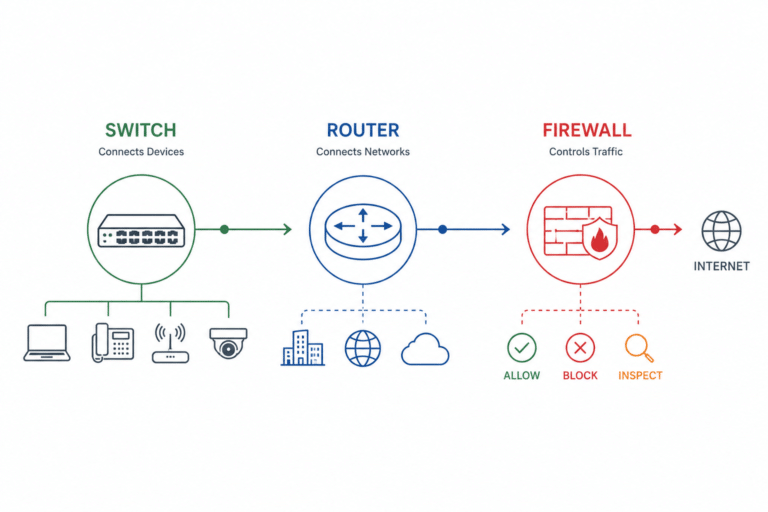
| WAN router | Connects a branch, office, or data center to WAN links |
| Firewall | Secures traffic between sites, internet, and cloud |
| SD-WAN edge device | Selects the best path across MPLS, broadband, LTE/5G |
| Layer 3 switch | Aggregates LAN traffic before WAN handoff |
| Modem / CPE | Terminates ISP or carrier connection |
| Cellular gateway | Provides 4G/5G WAN backup |
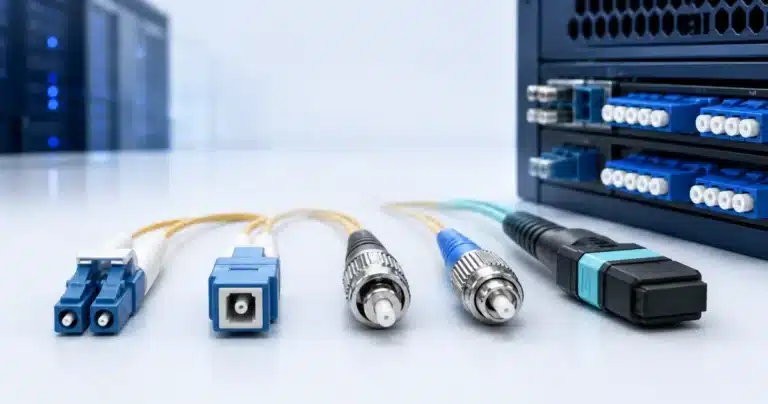
| Optical module | Connects fiber WAN links |
| VPN concentrator | Terminates remote or site-to-site VPN connections |
In an enterprise network, a branch site may use a router or SD-WAN edge device to connect to the WAN, a firewall to secure traffic, a switch to aggregate local devices, and optical modules to connect fiber links.
For Cisco-based environments, WAN infrastructure may include Cisco routers, Cisco firewalls, Cisco switches, optics, modules, and SD-WAN-capable hardware. The exact equipment depends on whether the site uses MPLS, broadband, dedicated fiber, VPN, LTE/5G, or hybrid WAN connectivity.
In procurement terms, a WAN design often translates into routers, firewalls, SD-WAN edge devices, optics, power modules, and switching hardware at each site. This is where a basic WAN example becomes a real deployment plan.
WAN vs LAN Examples: How to Tell the Difference
The easiest way to separate WAN and LAN is to ask where the network operates.
A LAN is local. It usually connects devices inside a home, office, school building, warehouse, or campus.
A WAN connects locations, users, LANs, data centers, or cloud services across a larger geographic area.
| Example | LAN or WAN? | Explanation |
|---|---|---|
| Home Wi-Fi | LAN | Covers a local home network |
| Office Ethernet network | LAN | Connects devices inside one office |
| Office to branch connection | WAN | Connects different locations |
| Internet | WAN | Connects networks globally |
| VPN from home to company | WAN access | Extends access over the internet |
| School classroom network | LAN | Local network inside one building |
| Multi-campus university network | WAN | Connects separate campuses |
A single office network is usually a LAN. If that office connects to another branch office or cloud platform over a carrier or internet connection, that larger connection becomes part of the WAN.
If you are comparing WAN and LAN from a router or port perspective, see our related guide: WAN vs LAN port: what’s the difference and which one should you use?
Which WAN Example Fits a Business Network?
Different businesses need different WAN designs. A small office, a retail chain, a hospital group, and a global enterprise do not have the same WAN requirements.
| Business Need | Suitable WAN Example |
|---|---|
| Connect branch offices to headquarters | Branch office WAN |
| Connect stores to POS and inventory systems | Retail WAN |
| Connect hospital sites and data systems | Healthcare WAN |
| Connect data centers for disaster recovery | Data center interconnect |
| Connect offices to cloud applications | Cloud-connected WAN |
| Improve multi-site performance and cost | SD-WAN |
| Add backup for unstable links | 5G / LTE WAN failover |
| Support remote workers | VPN / SASE access |
For a small business with one office, a basic internet connection may be enough. For a company with multiple branches, a WAN router, firewall, VPN, and SD-WAN platform may be needed. For a retail chain, LTE or 5G backup may be important. For a healthcare group, security and uptime may be the first priority.
The best WAN example depends on what the business needs to connect.
In real enterprise planning, the main questions are:
- How many sites need to connect?
- Are applications hosted in a data center or cloud?
- Is traffic business-critical?
- Is backup connectivity required?
- Are users remote, on-site, or both?
- What security controls are required?
- What WAN equipment is already installed?
- Does the business need MPLS, VPN, SD-WAN, 5G backup, or dedicated fiber?
Answering these questions helps turn a WAN example into a practical network design.
FAQ About WAN Examples
What is an example of a WAN?
The Internet is the most common example of a WAN. Business WAN examples include branch-office networks, bank ATM networks, retail store WANs, cloud-connected enterprise networks, university multi-campus networks, and SD-WAN deployments.
What are 5 examples of WAN?
Five examples of WAN are the Internet, a corporate branch-office WAN, a bank ATM network, a university multi-campus WAN, and an SD-WAN deployment across multiple business sites.
Is the Internet an example of WAN?
Yes. The Internet is the largest and most common example of a WAN because it connects networks, users, devices, servers, data centers, and cloud services across the world.
What is the largest example of WAN?
The Internet is the largest example of a WAN. It connects many smaller networks around the world, including home networks, office networks, mobile networks, data center networks, and service provider networks.
Is Wi-Fi a WAN?
Usually no. Wi-Fi is normally a LAN access technology inside a home, office, school, or campus. It becomes part of WAN access only when it connects users to remote networks through an internet or carrier connection.
Is VPN a WAN?
A VPN is not usually the WAN itself, but it is commonly used for WAN access or site-to-site WAN connectivity. It allows remote users or branch offices to securely connect across the internet or another wide area connection.
Is a school network an example of WAN?
A single school building network is usually a LAN. A school district network or university network that connects multiple campuses, data centers, cloud services, or remote sites can be a WAN.
Is a router an example of WAN?
No. A router is not a WAN by itself. It is a network device used to connect a LAN, branch office, or business site to a WAN service such as the internet, MPLS, VPN, or SD-WAN.
What devices are used in a WAN?
Common WAN devices include WAN routers, firewalls, SD-WAN edge devices, modems or CPE devices, cellular gateways, VPN concentrators, Layer 3 switches, and optical modules.
What is a business example of WAN?
A business WAN example is a company connecting headquarters, branch offices, data centers, cloud platforms, and remote workers through MPLS, VPN, broadband, SD-WAN, dedicated fiber, or LTE/5G backup links.
Final Answer: What Are the Best Examples of WAN?
The Internet is the simplest and largest example of a WAN. In business networks, the best WAN examples include branch-office networks, bank ATM networks, retail store networks, university multi-campus networks, hospital and healthcare WANs, data center interconnects, cloud-connected enterprise networks, and SD-WAN deployments.
A network is a WAN when it connects users, LANs, offices, data centers, or cloud services across different geographic locations.
For businesses, the most useful WAN example is usually not just “the Internet.” It is the specific network that connects branches, users, applications, data centers, and cloud platforms securely and reliably.
For businesses building or upgrading wide area networks, Layer23-Switch provides Cisco routers, switches, firewalls, optics, modules, and enterprise network hardware for global B2B projects. Whether you are connecting branch offices, upgrading WAN infrastructure, or sourcing Cisco equipment for multi-site deployment, Layer23-Switch can support your project with reliable product availability and professional network hardware supply.