Multimode Fiber Standards: OM1, OM2, OM3, OM4, and OM5 Explained
In today’s information age, fiber-optic communication—known for high speed and large bandwidth—has become the backbone of modern networks. Among fiber systems, multimode fiber (MMF) is favored for short-distance links at relatively low cost.
This article walks through the major multimode fiber standards—OM1, OM2, OM3, OM4, and OM5— to highlight their differences and typical use cases.

Introduction
Fiber-optic communication transmits data using light. Compared with copper, it offers higher bandwidth, lower loss, and longer reach, making it essential for the internet, telephony, and data transport.
Multimode fiber carries multiple propagation modes and typically has a larger core than single-mode fiber, which makes it well suited to short-reach, high-bandwidth connections. The OM (Optical Multimode) classification defines performance tiers and application characteristics.
OM1 Multimode Fiber
OM1 was one of the earliest MMF standards. With a 62.5-μm core, it’s used for short links such as LANs and enterprise networks. It typically uses LED light sources and supports shorter distances at lower cost.
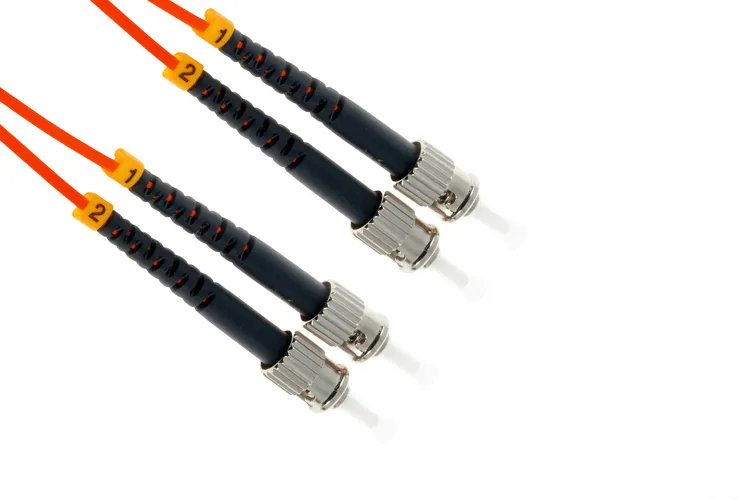
- Core diameter: 62.5 μm
- Operating wavelength: 850 nm (IR range)
- Modal bandwidth: 160 MHz·km
- Data rate: 1 Gbit/s to 10 Gbit/s
Because of its larger core, OM1 has limited bandwidth and reach for high-speed requirements. Still, it remains a cost-effective option in price-sensitive scenarios.
OM1 Use Cases
- LANs: Widely used to connect devices and servers in enterprise networks at low cost with adequate performance.
- Fiber to the Desk (FTTD): Suitable when bringing fiber into offices or work areas for higher bandwidth access.
Despite these advantages, its lower bandwidth and reach restrict OM1 in high-speed environments.
OM2 Multimode Fiber
OM2 is an upgrade over OM1 with a smaller 50-μm core, targeting short-reach links that need higher bandwidth.
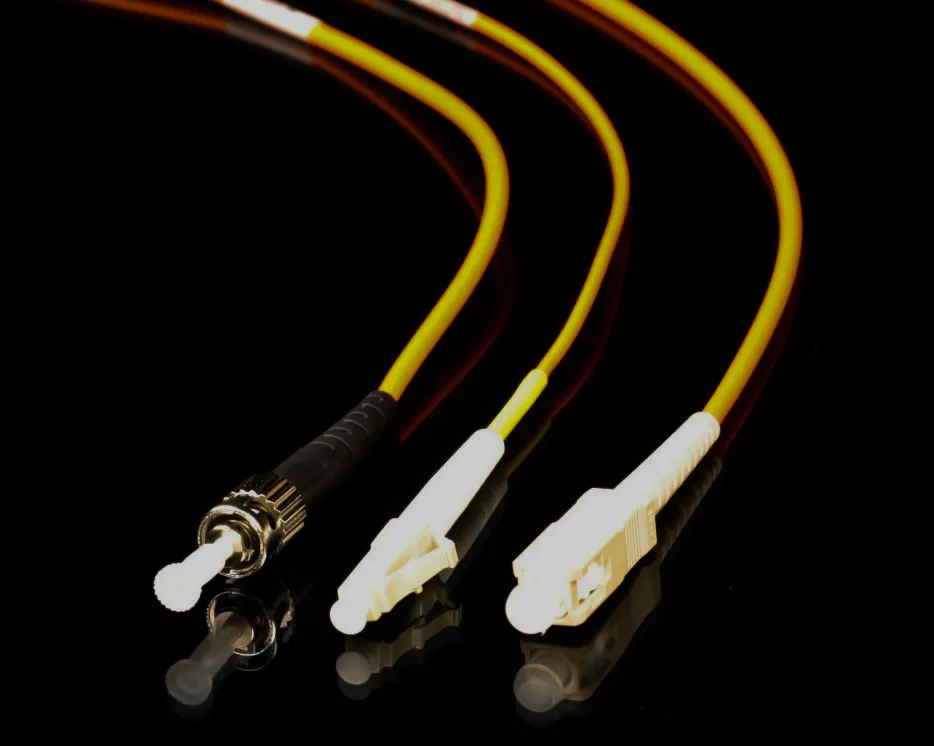
- Core diameter: 50 μm
- Operating wavelength: 850 nm (IR range)
- Modal bandwidth: 500 MHz·km
- Data rate: 1 Gbit/s to 10 Gbit/s
Compared with OM1, OM2’s smaller core increases modal bandwidth, making it better for higher-speed transmission. It also typically uses LED sources for short-distance, mid-rate applications.
OM1 vs OM2
- Bandwidth: OM2 provides significantly higher bandwidth than OM1, enabling faster data rates.
- Cost: Slightly more expensive than OM1, but offers better value in performance-driven scenarios.
OM2 Use Cases
- Enterprise networks: Connecting data centers, servers, and network gear where more bandwidth is needed.
- Campus networks: Common in universities that must handle large traffic volumes.
OM3 Multimode Fiber
OM3 marks a major uplift to meet higher-speed and larger-bandwidth demands. It retains the 50-μm core but improves transmission through better fiber design and VCSEL (vertical-cavity surface-emitting laser) sources.
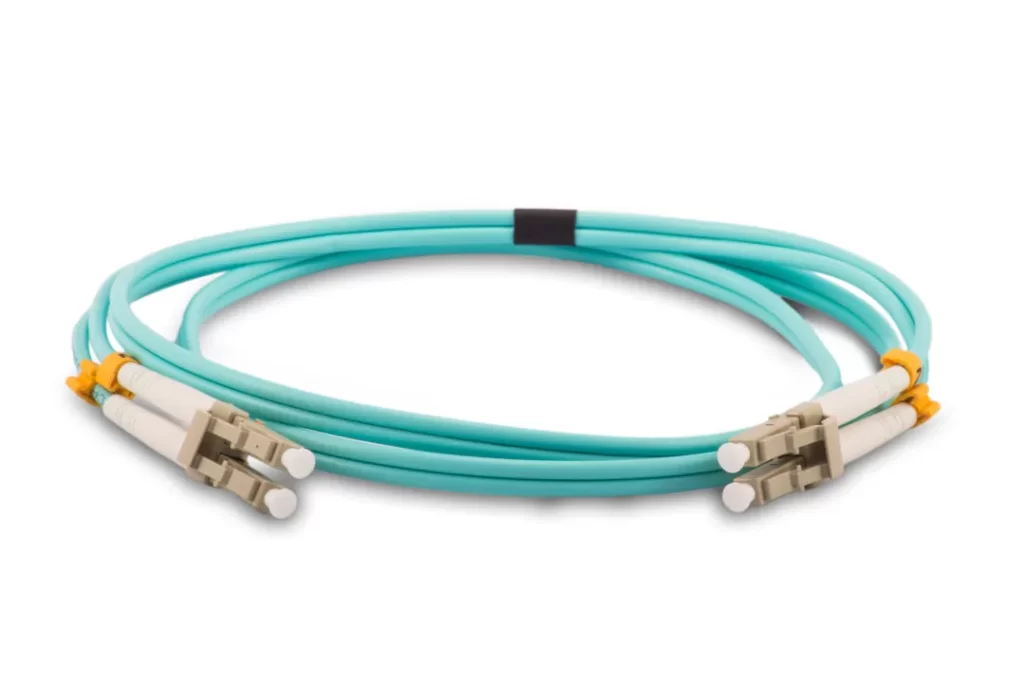
- Core diameter: 50 μm
- Operating wavelength: 850 nm (IR range)
- Modal bandwidth: 2000 MHz·km
- Data rate: 10 Gbit/s to 100 Gbit/s
OM2 vs OM3
- Bandwidth: OM3’s bandwidth is far higher than OM2, supporting much faster data rates.
- Reach: At equal data rates, OM3 can achieve longer distances.
OM3 Use Cases
- Data centers: Excellent for high-density server, storage, and switch interconnects.
- High-performance computing: Fits supercomputers and large-scale processing clusters.
OM4 Multimode Fiber
OM4 further boosts bandwidth, reach, and density with optimized materials and VCSEL performance.
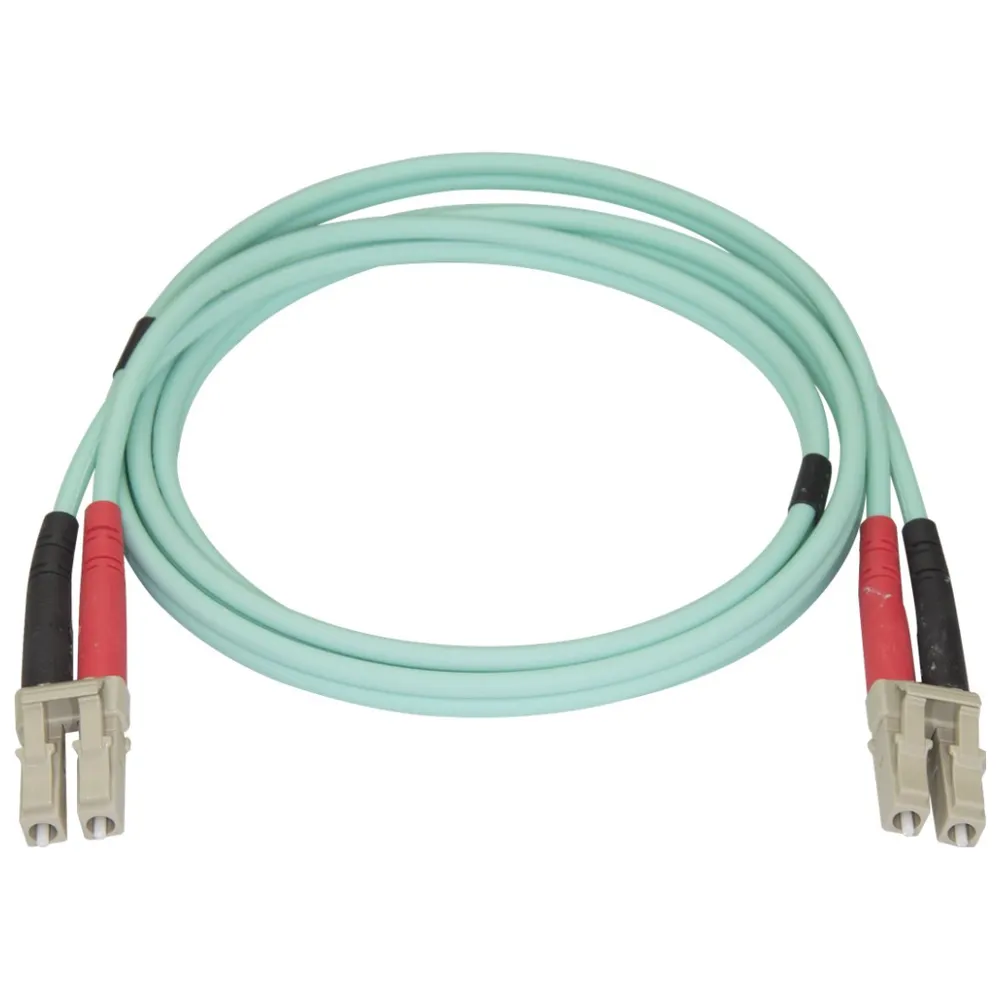
- Core diameter: 50 μm
- Operating wavelength: 850 nm (IR range)
- Modal bandwidth: 4700 MHz·km
- Data rate: 10 Gbit/s to 100 Gbit/s
OM3 vs OM4
- Bandwidth: OM4 delivers notably higher bandwidth than OM3, excelling in high-density scenarios.
- Reach: OM4 supports longer distances at the same data rate.
OM4 Use Cases
- Large-scale data centers: Ideal for dense connections across many servers and network devices.
- Cloud computing: Widely used where high bandwidth and dense interconnects are required for virtualization and cloud workloads.
OM5 Multimode Fiber
OM5 is the newest OM standard, designed for future needs demanding more bandwidth and flexibility. It introduces wavelength-division multiplexing (WDM) across a wider wavelength range.
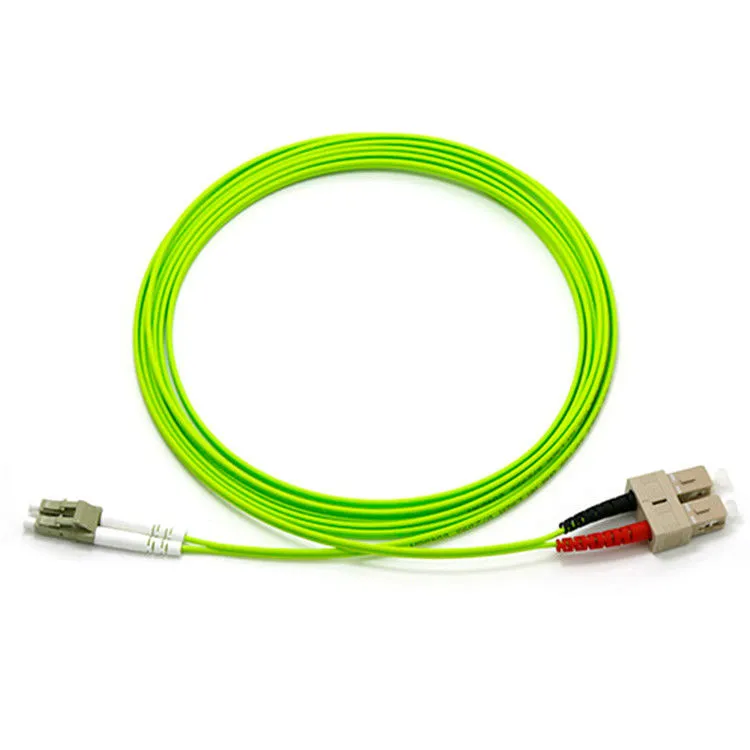
- Core diameter: 50 μm
- Operating wavelength: 850–953 nm
- Modal bandwidth: 3500 MHz·km
- Data rate: 40 Gbit/s to 100 Gbit/s
By enabling multiple wavelengths on a single fiber, OM5 provides higher aggregate bandwidth, making it a strong choice for next-gen data centers and HPC.
OM4 vs OM5
- WDM: OM5 broadens the usable wavelength range to support more channels and greater flexibility.
- Bandwidth: Slightly higher bandwidth than OM4, advantageous in high-density environments.
OM5 Use Cases
- Hyperscale cloud providers: Suited to growing traffic demands between large data centers.
- 5G base stations: High bandwidth and WDM support deliver excellent performance for fronthaul/backhaul links.
OM1 vs OM2 vs OM3 vs OM4 vs OM5 (Side-by-Side)
|
Feature |
OM1 |
OM2 |
OM3 |
OM4 |
OM5 |
|---|---|---|---|---|---|
|
Core diameter (μm) |
62.5 |
50 |
50 |
50 |
50 |
|
Wavelength (nm) |
850 |
850 |
850 |
850 |
850–953 |
|
Modal bandwidth (MHz·km) |
160 |
500 |
2000 |
4700 |
3500 |
|
Data rate (Gbit/s) |
1–10 |
1–10 |
10–100 |
10–100 |
40–100 |
|
WDM support |
No |
No |
No |
No |
Yes |
Summary
We reviewed the technical specs, performance traits, and application scenarios of OM1, OM2, OM3, OM4, and OM5 multimode fibers. From OM1’s foundational role to OM5’s WDM innovation, each standard serves distinct needs.
Looking ahead, fiber technology will continue to evolve for higher bandwidth, capacity, and reach. WDM, new materials, and integration with emerging technologies will drive further breakthroughs—propelling optical communications to new heights.