The Different Types of Modems: Cable, DSL, Fiber, Cellular, and More
A modem is named for what it does: modulate and demodulate. It converts the digital data your devices produce into a signal that can travel over a specific physical medium — a copper phone pair, a coaxial cable, a radio channel, or a fiber strand — and converts the incoming signal back again. Because each of those media carries signals differently, each one needs its own kind of modem, and that is why “modem” is really a family of devices rather than a single box.
The main types, grouped by the access technology they serve, are cable, DSL, fiber, cellular, and satellite, plus the legacy dial-up modem and the leased-line units used in business networks. This guide explains how each type works and why the medium dictates the design, then clears up the two labels the industry uses loosely — the fiber “modem” that is really an ONT, and the “gateway” that is really a modem combined with a router.
What Is a Modem?
A modem is the device that terminates your internet connection where it enters the building and translates it into digital data your network can use. The word is a contraction of modulator-demodulator: on the way out it modulates digital bits onto a carrier signal suited to the line, and on the way in it demodulates that signal back into bits.
The reason there is more than one type comes down to the medium. A telephone copper pair, a TV coaxial cable, a cellular radio band, and an optical fiber each have different bandwidth, noise, and distance characteristics, so each demands a different modulation scheme and a different modem built around it. A modem does not route traffic or assign addresses — it only gets your data onto and off of the access line. That distinction becomes important later, because the box most people call a modem usually does several other jobs too.

How Modems Work: Why Each Access Medium Needs Its Own Type
Modulation is the mechanism that makes a modem a modem, and it is also the reason the types are not interchangeable. Digital data is a stream of ones and zeros; a physical line carries a continuous analog signal. The modem encodes the bits by varying that signal — its amplitude, phase, or frequency — in patterns the receiver can decode.
The scheme is tuned to the medium, and swapping media means swapping the whole design:
- DSL runs over the twisted copper pair of a phone line using Discrete Multitone (DMT), which splits the usable spectrum into hundreds of narrow 4.3125 kHz subcarriers and loads data onto each one independently — the approach standardized in ITU-T G.992 (ADSL) and G.993.2 (VDSL2).
- Cable runs over coaxial TV cable using Quadrature Amplitude Modulation (QAM); newer DOCSIS 3.1 systems add OFDM, packing far more bits into the same spectrum.
- Cellular modulates data onto licensed radio frequencies between the device and a nearby tower.
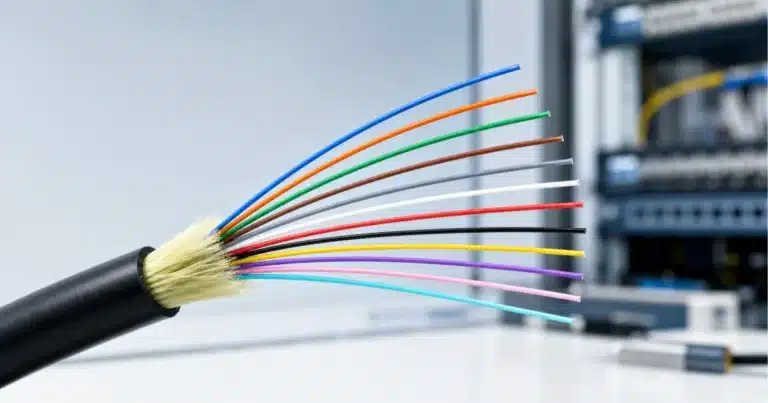
- Fiber does not modulate an electrical carrier at all — it switches light on and off down a glass strand, which is why its terminating device is built differently from every other modem.
That last point is the crux of the whole topic: the medium comes first, and the modem is designed around it. A device that speaks DMT over copper cannot terminate a coaxial or optical line, so each access technology ships with its own modem type.
Types of Modems Compared
The table below groups the main modem types by the medium they serve, the modulation or standard behind each, and where the device sits in the connection.
| Modem type | Medium | Modulation / standard | Terminating device | Typical use |
|---|---|---|---|---|
| Cable modem | Coaxial cable | QAM / OFDM (DOCSIS) | Cable modem | Home and small-office broadband over cable-TV plant |
| DSL modem | Copper phone pair | DMT (ITU-T G.992 / G.993.2) | DSL modem | Broadband where cable/fiber is unavailable |
| Fiber | Optical fiber | On-off light keying (GPON / XGS-PON) | ONT (Optical Network Terminal) | Fiber-to-the-premises, highest speeds |
| Cellular modem | Radio (licensed spectrum) | LTE / 5G NR | Gateway or pluggable router module | Mobile, fixed-wireless, and branch-WAN backup |
| Satellite modem | Radio to a dish | Proprietary / DVB-S2 | Satellite modem | Remote sites with no wired option |
| Dial-up modem | Voiceband phone line | V.90 / V.92 | Dial-up modem | Legacy; up to 56 kbit/s |
| Leased-line unit | Digital circuit (T1/E1) | Line coding | CSU/DSU | Enterprise point-to-point circuits |
Cable Modems
A cable modem connects over the same coaxial cable that carries cable television, sharing that plant with internet data. It follows the DOCSIS standard from CableLabs: older DOCSIS 3.0 equipment uses single-carrier QAM, while DOCSIS 3.1 adds OFDM to reach multi-gigabit downstream rates on the same coax.
The defining characteristic of cable is that the local segment is shared among the homes on it. Bandwidth is pooled across neighbors on the same node, so real-world speeds can dip during peak evening hours when many users are active at once — a behavior inherent to the shared-medium design, not a fault in any one modem.
DSL Modems
A DSL modem delivers broadband over the ordinary twisted-pair copper of a telephone line, using DMT modulation on frequencies above the voice band so the line can carry a phone call and data at the same time. ADSL and VDSL2 are the common variants, standardized in ITU-T G.992 and G.993.2.
DSL’s defining constraint is distance. The copper signal attenuates with loop length, so throughput falls the farther the premises sit from the provider’s central office or street cabinet — a subscriber close to the exchange may see full VDSL2 rates while one several kilometers out gets a fraction. DSL remains widely deployed because it reuses telephone wiring already in the ground, which makes it available in areas cable and fiber have not reached.
Fiber Modems and the ONT
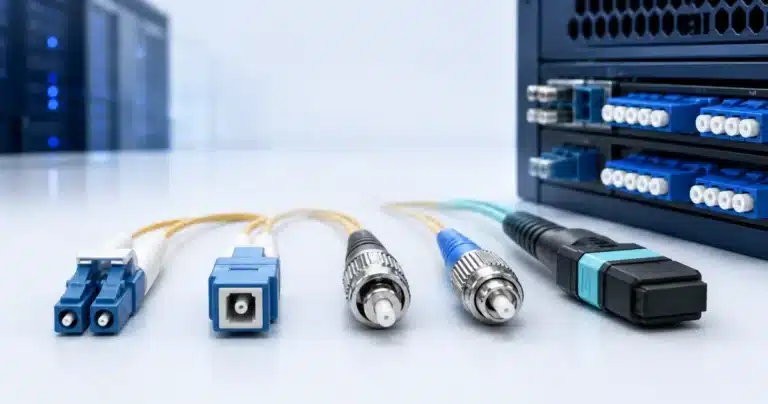
Fiber-to-the-premises does not use a modem in the traditional sense — it uses an ONT (Optical Network Terminal). Because fiber is a natively digital optical link, there is no analog carrier to modulate onto a copper or radio medium; the ONT instead terminates the passive optical network and converts the light signal into the electrical Ethernet your router understands. The governing standards are ITU-T G.984 for GPON (up to 2.4 Gbit/s downstream) and G.9807.1 for XGS-PON (10 Gbit/s symmetric).
Technically, then, an ONT is a media converter and PON termination rather than a modulator-demodulator. In practice, providers and retailers often call it a “fiber modem” because it sits in the same spot in the home and does the same job of terminating the access line — a harmless shorthand, as long as you know that a fiber install and a DSL or cable install use fundamentally different hardware.
Cellular Modems: LTE and 5G
A cellular modem modulates data onto licensed radio spectrum to reach a nearby mobile tower, and it appears in two very different packages. In the home, it is usually built into a gateway — a single unit that combines the cellular modem with a Wi-Fi router, sold for fixed-wireless or 5G home internet.
In business and branch networks, the cellular modem is often a pluggable module inside the router rather than a standalone box. Cisco’s ISR 1100 Series routers, for example, accept Pluggable Interface Modules ranging from CAT4 and CAT6 LTE up to CAT18 LTE Advanced Pro and 5G, so the router itself becomes the cellular termination for a WAN uplink or an automatic backup path when the primary wired link fails. Treating the cellular modem as a module inside the edge router — instead of a consumer appliance beside it — is the main way the “modem” concept shows up in enterprise design.
Satellite, Dial-Up, and Leased-Line Modems
Three further types round out the family, each serving a narrow case.
- Satellite modems modulate data onto a radio link to a dish pointed at an orbiting satellite. They reach sites with no wired option at all, at the cost of higher latency from the long signal path — pronounced for geostationary systems, lower for newer low-earth-orbit constellations.
- Dial-up modems are the original consumer modem, converting data to audible tones across the voiceband of a plain phone line at up to 56 kbit/s under the ITU-T V.90 and V.92 standards. They are effectively legacy today but remain the clearest illustration of what “modem” originally meant.
- Leased-line units terminate a dedicated digital circuit such as a T1 or E1 in enterprise networks. The device is strictly a CSU/DSU rather than a modem, but it fills the same role — terminating the carrier’s line and handing clean data to the router.
Modem vs Router vs Gateway
These three terms are the most commonly confused in the whole topic, because a single box at home often does all three jobs. They are distinct functions:
- A modem terminates the ISP’s access line and converts its signal to and from digital data. That is its only job.
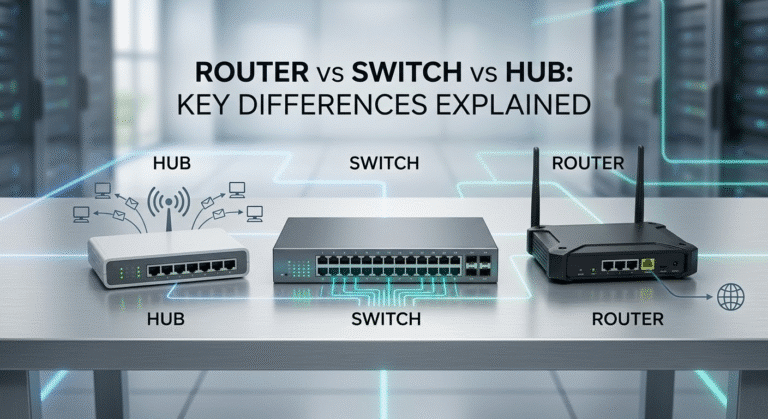
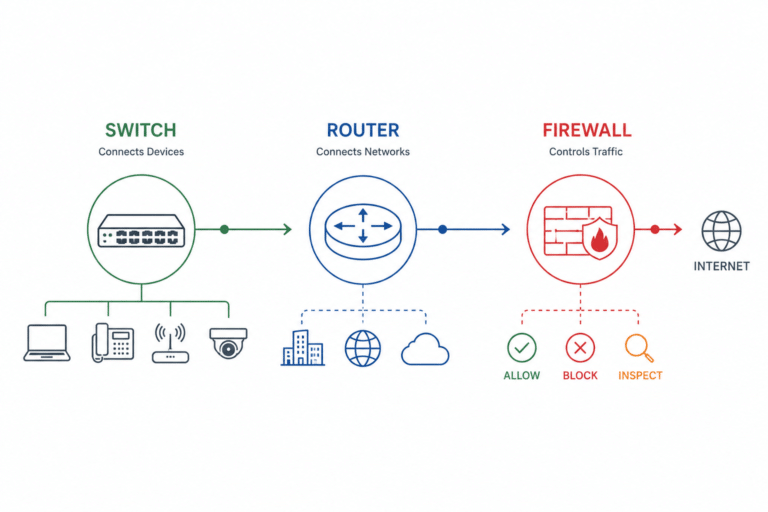
- A router sits behind the modem and moves traffic between networks — it assigns local IP addresses, performs NAT, runs the firewall, and usually provides Wi-Fi. It does not terminate the access line.
- A gateway is a single unit that combines a modem and a router in one enclosure. Most ISP-supplied “modems” are actually gateways, which is the source of most of the confusion.
The practical test: whatever the ISP’s line physically plugs into is performing the modem function; whatever hands out your Wi-Fi and local addresses is performing the router function. In a gateway, one box does both.
Internal vs External Modems
Modems are also classified by how they are packaged. An external modem is a separate box connected to the router or computer by a cable — the standard arrangement for cable, DSL, and fiber service today. An internal modem is a card or chip inside the device itself, as in a laptop’s built-in cellular modem or the pluggable module inside an enterprise router. The internal-versus-external split is about physical form, not about the access technology, so it cuts across every type above.
How to Tell Which Type of Modem You Have
The connector on the line side identifies the type at a glance:
- A coaxial screw-on (F-type) connector means a cable modem.
- A small RJ11 phone-style jack means a DSL modem.
- A fiber connector (often green SC/APC) feeding a small box means a fiber ONT.
- A SIM card slot and external antennas, with no wired line at all, means a cellular modem or gateway.
If the same box also hands out Wi-Fi and local IP addresses, it is a gateway performing both the modem and router roles.
Frequently Asked Questions
Can one device be both a modem and a router?
Yes — that combined device is called a gateway. Most equipment supplied by an ISP is a gateway, terminating the access line and routing local traffic in a single box, even though it is often labeled simply a “modem.”
Does fiber internet need a modem?
Not a traditional modem. Fiber uses an ONT (Optical Network Terminal), which terminates the optical line and converts it to Ethernet. It is commonly called a “fiber modem,” but it is technically a media converter rather than a modulator-demodulator.
Is a 5G home internet box a modem?
It contains one. A 5G home unit is a gateway: a cellular modem that modulates data onto 5G radio, combined with a Wi-Fi router in the same enclosure.
Can you still buy a dial-up modem?
Yes, though they are legacy hardware. Dial-up modems top out at 56 kbit/s under the V.90/V.92 standards and are used only where no broadband option exists.
Which modem type do enterprise networks use?
Enterprises rarely use a standalone consumer modem. Wired circuits terminate on a CSU/DSU or an ISP handoff into the edge router, and cellular is typically a pluggable module inside the router rather than a separate appliance.
References
- ITU-T G.992.1 / G.993.2 — ADSL and VDSL2 (Discrete Multitone modulation over copper)
- CableLabs — DOCSIS 3.0 and DOCSIS 3.1 specifications (QAM and OFDM over coaxial cable)
- ITU-T G.984 (GPON) and ITU-T G.9807.1 (XGS-PON) — passive optical network standards; ONT termination
- ITU-T V.90 / V.92 — voiceband dial-up modem standards
- Cisco ISR 1100 Series Integrated Services Routers — Cellular Pluggable Interface Module (LTE/5G) documentation