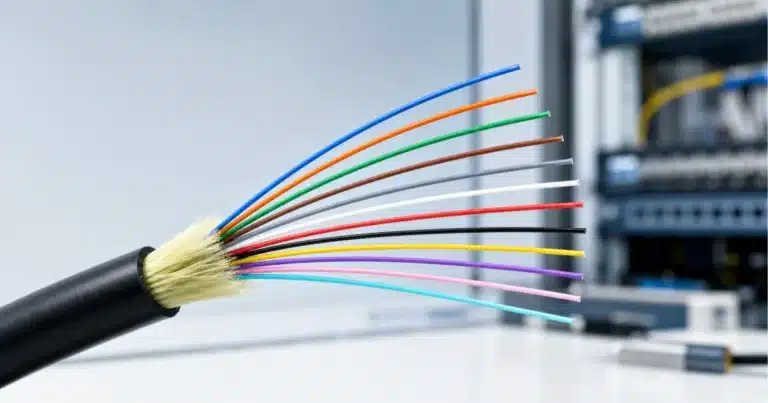
Fiber Optic Color Code Chart: TIA-598 for 12, 24, 48, and 144 Fibers
Quick answer: The TIA-598 color sequence is blue, orange, green, brown, slate, white, red, black, yellow, violet, rose, aqua. Those twelve...
Read More
IT Hardware Topic
Practical networking knowledge for enterprise IT teams, integrators, and technical buyers. Topics include switching, routing, wireless, security, interfaces, troubleshooting, and deployment concepts, with a focus on decision support and real infrastructure planning.
Category
Quick answer: The TIA-598 color sequence is blue, orange, green, brown, slate, white, red, black, yellow, violet, rose, aqua. Those twelve...
Read More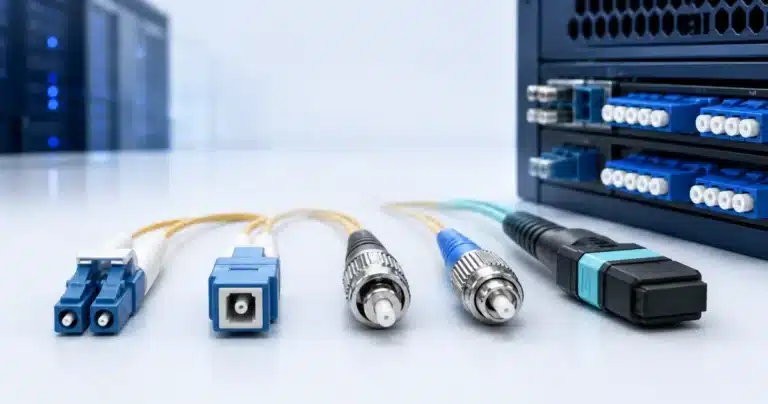
Quick answer: The main fiber optic connector types used in networks are LC, SC, ST, FC, MPO, and MTP. LC is...
Read More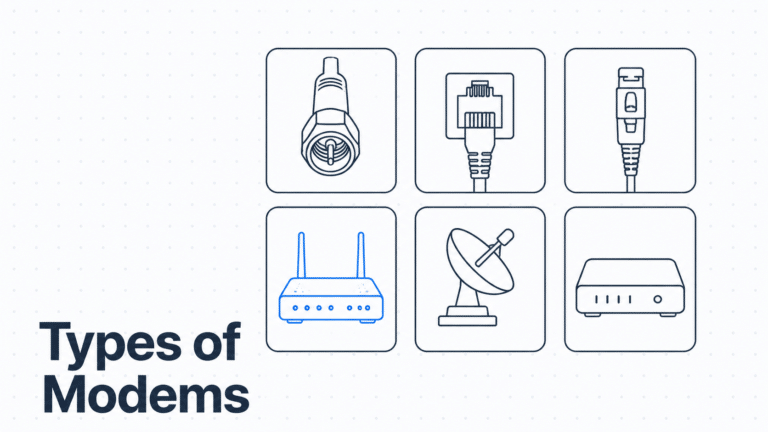
A modem is named for what it does: modulate and demodulate. It converts the digital data your devices produce into a signal...
Read More
Cisco Non-Stop Forwarding (NSF) is a high-availability feature that keeps a router or switch forwarding IP packets while its control...
Read More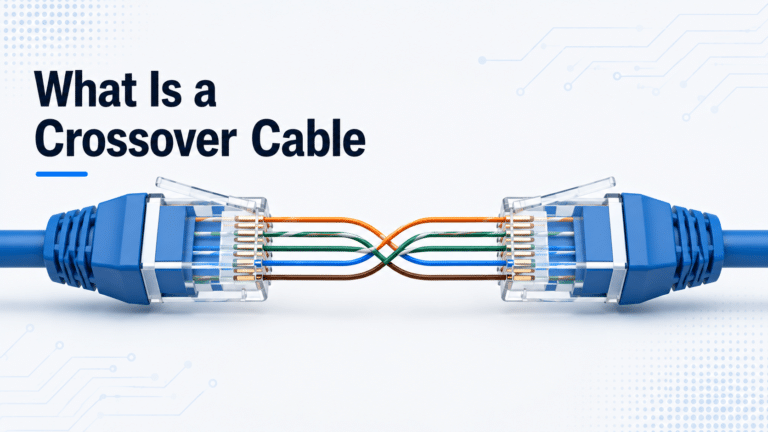
A crossover cable — also called a cross network cable or crossover Ethernet cable — is an Ethernet cable wired with the T568A standard...
Read More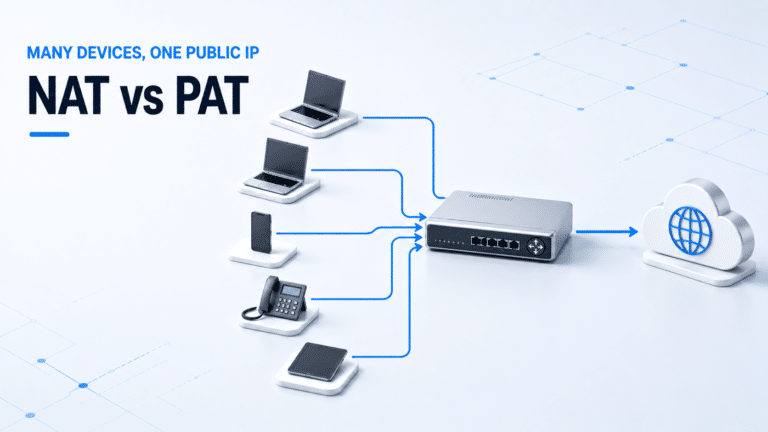
NAT and PAT both translate private IP addresses to public ones, but PAT also translates ports. Plain NAT (static or...
Read More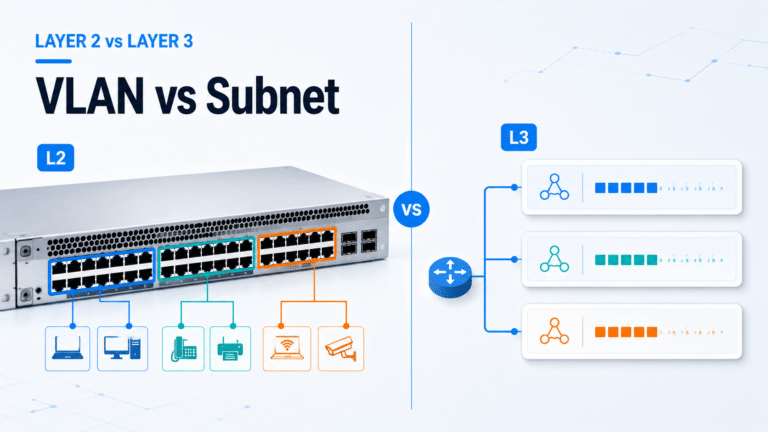
A VLAN and a subnet both segment a network, but at different layers. A VLAN isolates devices into separate broadcast...
Read More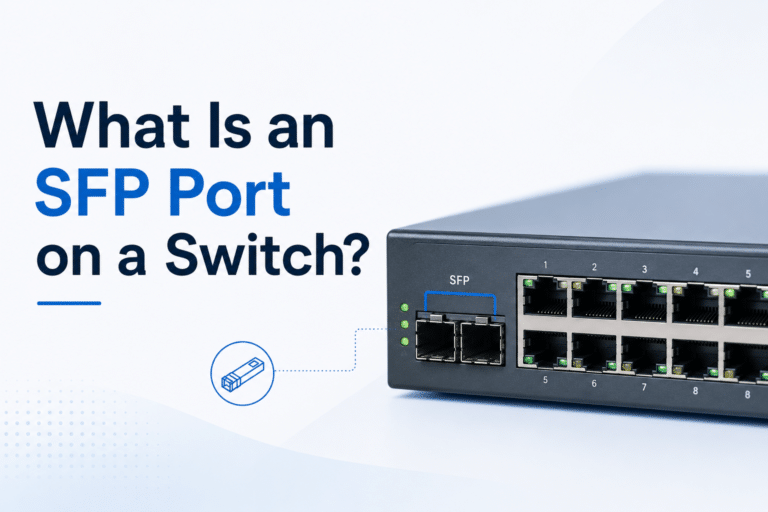
An SFP port is a modular slot on a network switch that accepts a small, hot-swappable transceiver module. The port...
Read More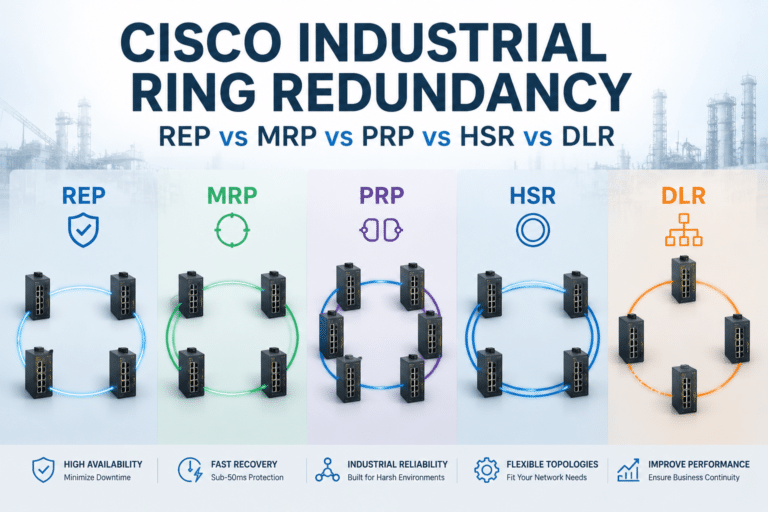
Five protocols cover ring and parallel redundancy on Cisco industrial switches: REP (Cisco-proprietary ring convergence), MRP (the IEC 62439-2 ring...
Read More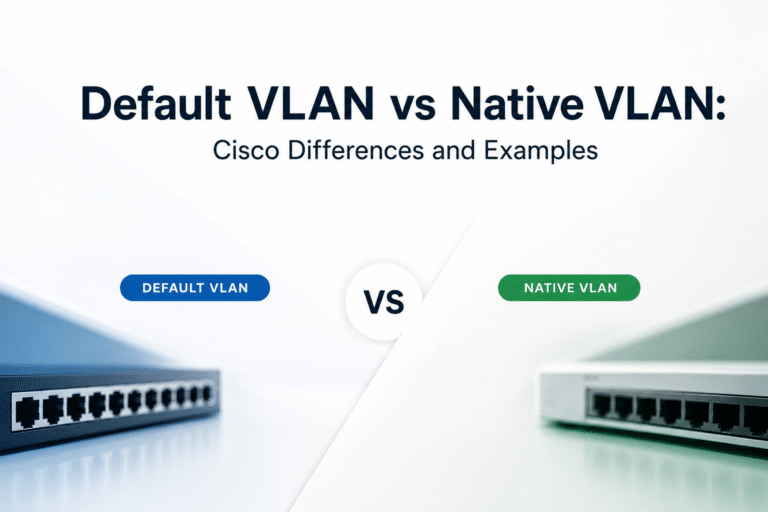
The default VLAN is the VLAN a switch uses for ports before you assign them to another VLAN. On Cisco...
Read More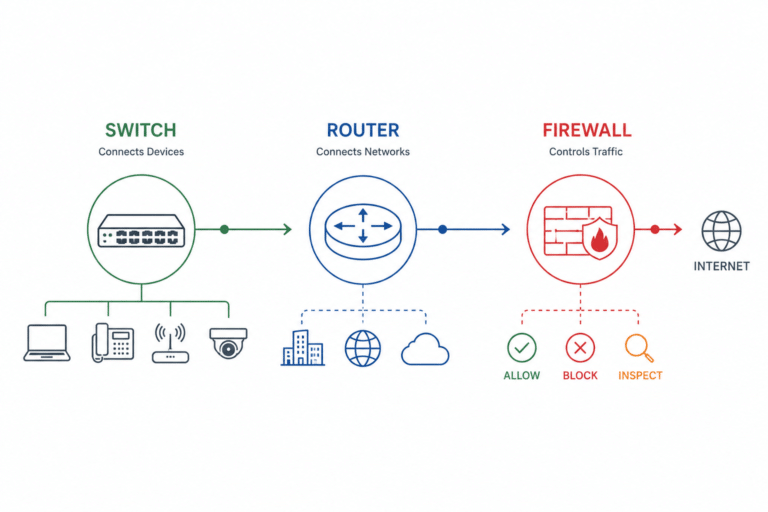
Most business networks don’t fail because a router, switch, or firewall is “bad.” They fail because the wrong device was...
Read More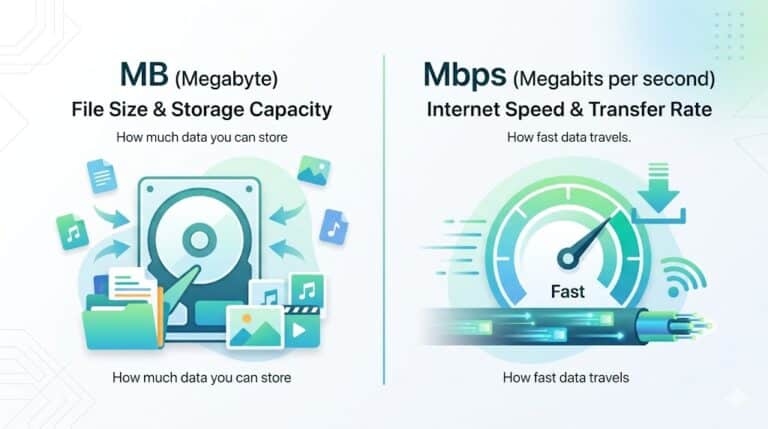
Mbps means megabits per second — a speed. MB/s means megabytes per second — also a speed, but 8 times larger. MB (megabyte) is a file size, not a speed. Because...
Read More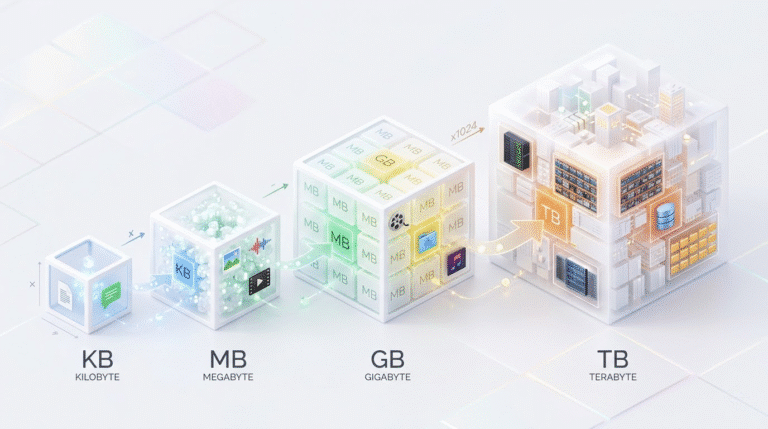
From smallest to largest, the order is byte < KB < MB < GB < TB. Each unit is about 1,000 times...
Read More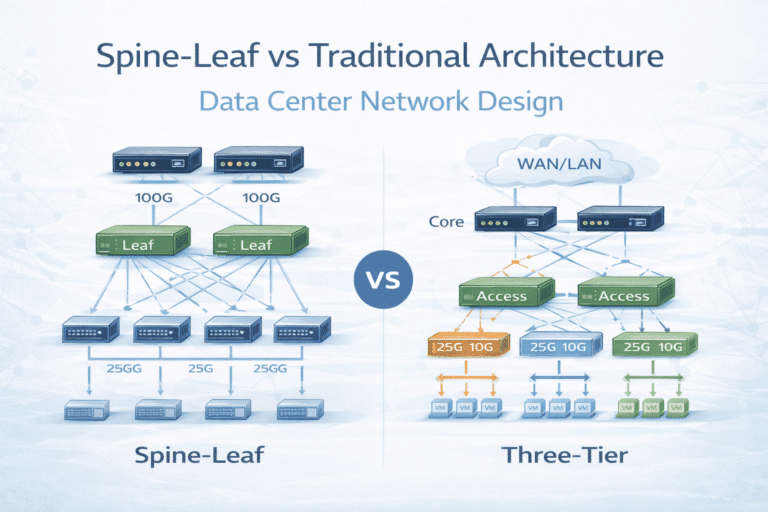
Direct Answer Spine-leaf architecture is a modern two-tier data center network design where every leaf switch connects to every spine...
Read More
Direct Answer 10 Gigabit Ethernet (10GbE) is a high-speed telecommunications standard defined by IEEE 802.3ae that enables data transmission at...
Read More