Cisco Smart Licensing Explained: Fix License Confusion Fast with an Enterprise Deployment Guide
Direct Answer: Cisco Smart Licensing is a centralized, cloud-based license management system that replaces traditional PAK-based activation. It links devices directly to a Cisco Smart Account, allowing enterprise IT teams to track software entitlements, activate features, and maintain network-wide compliance from a single dashboard (CSSM).
Cisco licensing has evolved significantly over the past decade, moving from device-locked Product Authorization Keys (PAK) to centralized license management through Smart Accounts. If you want to understand how Cisco licensing models, subscriptions, and feature tiers work across modern platforms, start with our complete guide to Cisco licensing models and architecture.
This article focuses specifically on Cisco Smart Licensing, explaining how it works, how devices register to the licensing system, and how enterprise networks maintain compliance across large deployments.

What Is Cisco Smart Licensing?
Cisco Smart Licensing is a cloud-based license management architecture that allows organizations to track and allocate software licenses across multiple devices and locations.
Instead of activating licenses individually on each device using a Product Authorization Key (PAK), Smart Licensing connects devices to a centralized Smart Account, where all purchased entitlements are stored.
This architecture allows enterprise administrators to:
- Track license consumption across all devices.
- Simplify device onboarding and automated activation.
- Maintain real-time compliance visibility across the network.
- Manage software upgrades and feature tiers centrally.
In modern enterprise deployments, Smart Licensing is commonly used with platforms such as Cisco Catalyst campus switches, ISR/ASR routers, firewalls, and wireless controllers. The entire system is managed through the Cisco Smart Software Manager (CSSM) portal.
How Cisco Smart Licensing Works
Cisco Smart Licensing operates by connecting your hardware to a centralized licensing platform. The workflow typically follows four steps:
1. Smart Account Creation
Organizations create a Cisco Smart Account, which becomes the master container for all software licenses purchased from Cisco or authorized partners. A Smart Account typically represents the entire company, while Virtual Accounts can be created to represent specific departments, branches, or network domains.
2. License Purchase and Allocation
When licenses are purchased, they are automatically deposited into your Smart Account rather than delivered as physical or emailed PAK codes. Administrators can then allocate these licenses to specific Virtual Accounts.
3. Device Registration
Network devices register to the Smart Licensing system using a registration token. This token allows the switch or router to securely report its license usage to the CSSM cloud.
4. Continuous Compliance Monitoring
Once registered, the device periodically reports its license consumption. Administrators can monitor usage, compliance status, and expiration timelines, allowing IT teams to detect shortages before they affect production systems.
Cisco Smart Licensing Architecture
Enterprise networks can deploy Smart Licensing in several architectures depending on their security and outbound internet connectivity requirements.
| Deployment Mode | Description | Typical Use Case |
| Direct Cloud Access | Devices connect directly to Cisco CSSM via the internet. | Standard internet-connected enterprise networks. |
| SSM On-Prem | Local license server synchronizes with the Cisco cloud periodically. | Secure, regulated, or heavily firewalled environments. |
| Specific License Reservation (SLR) | Manual license authorization using offline files. | Highly restricted, air-gapped military or utility networks. |
Large enterprises often deploy SSM On-Prem to maintain licensing control within their internal infrastructure while still keeping their entitlement data synchronized with Cisco.
Cisco Smart Licensing vs Traditional Cisco Licensing
Before Smart Licensing, Cisco devices relied heavily on node-locked PAK licensing. The new system removes many operational bottlenecks associated with that legacy model.
| Feature | Traditional PAK Licensing | Cisco Smart Licensing |
| License Activation | Manual PAK registration per device. | Automatic through Smart Account tokens. |
| Device Binding | Locked to a single hardware serial number. | Flexible license pooling across the organization. |
| Tracking System | Manual spreadsheets and text files. | Centralized CSSM dashboard. |
| Compliance | Blind spot; difficult to audit. | Real-time visibility and alerts. |
Smart Licensing and Cisco Catalyst 9000 Platforms
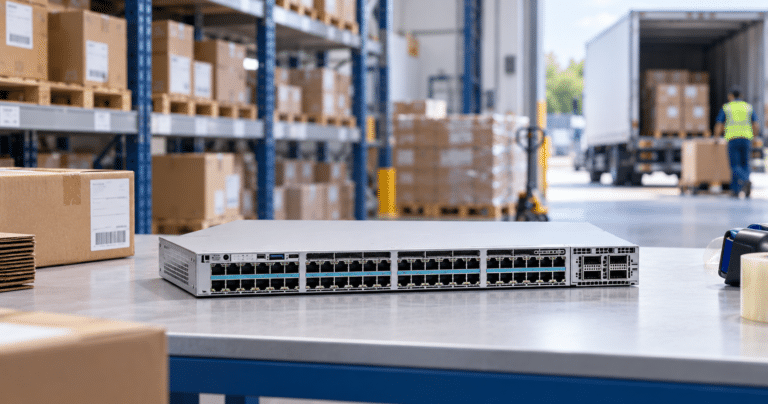
Modern enterprise campus networks often deploy Cisco Catalyst 9000 switches at the access, distribution, and core layers. These platforms use Smart Licensing to manage software tiers such as Network Essentials, Network Advantage, Cisco DNA Essentials, and Cisco DNA Advantage.
For example:
- Cisco Catalyst 9200 and 9300 commonly operate in the campus access layer.
- Cisco Catalyst 9400 is typically deployed as a modular access or aggregation chassis.
- Cisco Catalyst 9600 often serves as a massive fiber campus core or distribution switch.
Smart Licensing ensures that the correct software feature set is activated across your entire network architecture without requiring manual file transfers to each switch.
How to Fix Common Smart Licensing Errors Fast
If you are migrating from PAK to Smart Licensing, you will likely encounter compliance warnings in your terminal. Here is how to translate and fix the most common errors:
- “Out of Compliance”: Your Smart Account does not have enough purchased licenses for the features currently running on the switch. You must purchase more entitlements or disable the premium features (e.g., downgrading your OSPF/BGP features from Advantage back to Essentials).
- “Authorization Expired”: The device has not communicated with the CSSM cloud (or your local SSM On-Prem server) for over 90 days. Check your firewall rules or DNS settings to ensure the switch can successfully reach
smartreceiver.cisco.com. - “Unregistered”: The device lacks a valid registration token. You need to log into the CSSM portal, generate a new token, and input it into the switch CLI using the
license smart register idtoken <token>command.
Deployment Considerations for Enterprise Networks
Before enabling Smart Licensing in production networks, enterprise architects should evaluate several operational factors:
- Internet Connectivity: Direct Smart Licensing requires outbound HTTPS connectivity to Cisco licensing servers. Highly secured environments must architect an SSM On-Prem server.
- License Compliance Monitoring: Set up automated email alerts in CSSM to ensure that devices remain compliant and do not exceed purchased entitlements.
- Token Security: Registration tokens grant devices permission to pull licenses from your Smart Account. Treat these tokens like passwords and set them to expire after deployment.
When to Use Cisco Smart Licensing
Cisco Smart Licensing is not just recommended; it is mandatory for modern Cisco operating systems (like IOS XE 16.9.1 and later). It is especially critical for:
- Large Campus Networks: Organizations managing hundreds of switches across multiple buildings benefit from centralized license pooling.
- Network Automation Environments: Automated device provisioning systems (like Cisco DNA Center) integrate seamlessly with Smart Licensing for zero-touch rollouts.
Frequently Asked Questions (FAQ)
What is Cisco Smart Licensing used for?
Cisco Smart Licensing is used to centrally manage software licenses across Cisco devices. It allows organizations to activate features, track license usage, and maintain compliance through a Smart Account instead of using device-specific PAK codes.
Do all Cisco devices require Smart Licensing?
Most modern Cisco platforms—including the entire Catalyst 9000 series—require Smart Licensing. Older legacy devices may still rely on traditional PAK licensing.
What happens if Smart Licensing expires?
If a device falls out of compliance, Cisco typically provides a 90-day grace period before enforcement actions (such as blocking configuration changes or feature disabling) occur. Network traffic usually continues to flow, but administrators must resolve the shortage quickly.
Can Smart Licensing work without internet access?
Yes. Enterprises with highly secure or air-gapped networks can deploy Smart Software Manager On-Prem (SSM On-Prem) to manage licensing internally, or use Specific License Reservation (SLR) for fully disconnected devices.
Conclusion
Cisco Smart Licensing represents a major shift from traditional device-based licensing toward centralized software entitlement management. By linking network devices to a Smart Account, organizations gain improved visibility, simplified activation, and faster troubleshooting across the entire enterprise network.