Cisco Switch Selection: Commonly Overlooked Parameters
When selecting Cisco switches for an enterprise campus network, most teams focus on model numbers, port counts, and headline specifications.
In real-world deployments, however, many network issues are caused by parameters that were underestimated or ignored during the selection stage.
These overlooked factors often lead to early upgrades, unexpected costs, or performance bottlenecks—especially in growing campus environments.
This article highlights the most commonly overlooked parameters in Cisco switch selection and explains when they truly matter in enterprise campus networks.
This topic is part of our
Cisco Switch Selection Guide for Enterprise Campus Networks,
which provides a structured framework for designing and upgrading enterprise campus networks.
Uplink Bandwidth vs. Access Port Count
One of the most frequent mistakes in campus switch selection is prioritizing access port quantity over uplink capacity.
In many environments:
- Access ports are lightly utilized
- Uplinks become congested as wireless traffic grows
Why this matters:
- Wi-Fi 6 / 6E access points can easily saturate 1G uplinks
- Aggregating multiple access switches amplifies uplink pressure
- Bottlenecks often appear only after deployment
Selection principle:
Uplink bandwidth should be planned based on traffic growth, not just current usage.
PoE Budget Is More Important Than PoE Support
Many Cisco switches “support PoE,” but PoE support alone is not enough.
What is often overlooked:
- Total PoE budget per switch
- Power allocation across all ports
- Real-world draw of modern access points and cameras
Common scenario:
- Switch has 48 PoE ports
- Actual power budget supports only a fraction of them at full load
Selection principle:
Always calculate total PoE demand, not just PoE port availability.
Stacking Capability and Operational Simplicity
Stacking is often treated as an optional feature, but in campus networks it significantly impacts operations.
Why stacking matters:
- Simplifies management of multiple access switches
- Enables link aggregation across stack members
- Improves resilience during hardware failures
Without stacking:
- Each switch is managed independently
- Configuration drift becomes more likely
- Maintenance windows become more complex
Selection principle:
If more than one access switch is deployed per floor or closet, stacking should be considered a baseline requirement.
Oversubscription Ratios Between Layers
Oversubscription is unavoidable, but unmanaged oversubscription leads to unpredictable performance.
Typical issues include:
- Too many access ports feeding limited uplinks
- Distribution layer switches unable to handle peak traffic
- Latency spikes during busy hours
Oversubscription ratios should differ by layer:
- Access layer tolerates higher oversubscription
- Distribution and core layers should be designed conservatively
Selection principle:
Plan oversubscription intentionally, not by accident.
Redundancy Design vs. Business Impact
Not every campus network requires full hardware redundancy at every layer—but some layers are non-negotiable.
Common mistakes:
- Over-investing in redundancy where downtime impact is minimal
- Under-investing where outages affect the entire campus
Examples:
- Access layer redundancy may be acceptable at reduced levels
- Distribution and core layers typically require stronger resilience
Selection principle:
Match redundancy levels to business impact, not theoretical best practices.
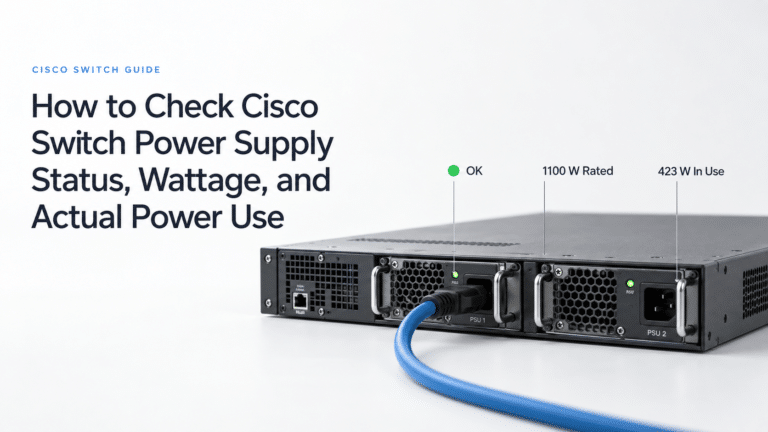
Power Supply and Environmental Constraints
Power considerations are often postponed until deployment, which can limit available options.
Overlooked factors include:
- Redundant power supply requirements
- Rack space and airflow
- Power availability in wiring closets
These constraints can affect:
- Switch model selection
- Maximum PoE output
- Future expansion options
Selection principle:
Validate physical and power constraints before finalizing switch models.
Lifecycle, Support, and Upgrade Paths
Switch selection is rarely a one-time decision.
Ignoring lifecycle considerations can result in:
- Shortened usable lifespan
- Limited upgrade paths
- Increased operational risk
Key factors to verify:
- End-of-Life (EOL) timelines
- Compatibility within the same product family
- Availability of power supplies and modules over time
Selection principle:
Lifecycle planning should be part of the initial selection process, not an afterthought.
How These Parameters Fit into the Overall Selection Process
These overlooked parameters are part of a broader Cisco switch selection framework for enterprise campus networks.
They are especially critical when defining access layer requirements, where early decisions have long-term consequences.
For a structured overview of the complete campus switch selection process, refer to the main guide:
Cisco Switch Selection Guide for Enterprise Campus Networks
Final Thoughts
Cisco switch selection should not be driven by datasheets alone.
Understanding which parameters matter, when they matter, and why they matter is essential for building stable and scalable campus networks.
By addressing these commonly overlooked factors early, organizations can avoid unnecessary upgrades and design networks that support both current needs and future growth.
Need Help with Cisco Switch Selection or Campus Network Planning?
If you need assistance with:
- Access layer design
- PoE and uplink capacity planning
- Campus network upgrades
- Cisco hardware sourcing and lifecycle planning
Our team provides professional guidance tailored to enterprise campus environments.