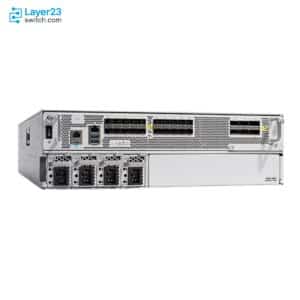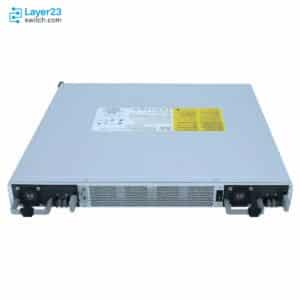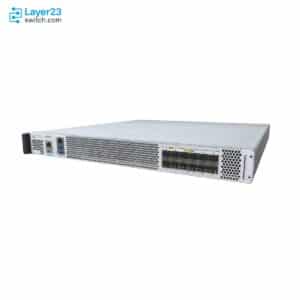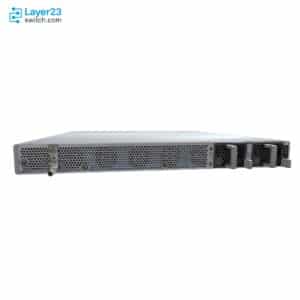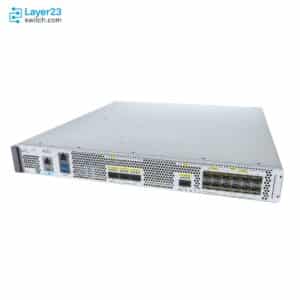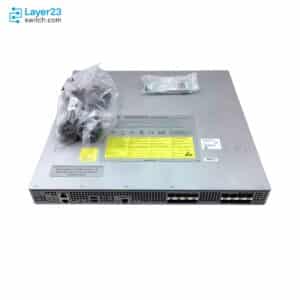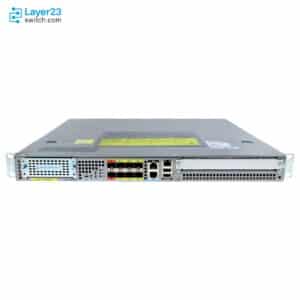
Cisco Catalyst 8500 vs ASR 1000 and 8500L: Enterprise Edge Router Selection
A practical selection guide for Cisco Catalyst 8500 Series Edge Platforms — choosing between C8500-12X4QC, C8500-12X, and C8500L-8S4X, and comparing them with ASR 1000 Series routers for SD-WAN, secure edge, high-scale routing, and ASR refresh planning.
The Cisco Catalyst 8500 Series Edge Platforms are the forward-looking branch, WAN edge, and SD-WAN edge family in the Cisco Catalyst 8000 portfolio. Many buyers reach the 8500 family while comparing it with older Cisco ASR 1000 Series routers, especially the ASR1001-X, ASR1001-HX, and ASR1002-HX. The decision is not simply “newer is better.” It depends on the exact platform, throughput target, interface plan, SD-WAN scale, IOS XE scale, license model, optics, and whether the site is a new build or a migration from an existing ASR deployment.
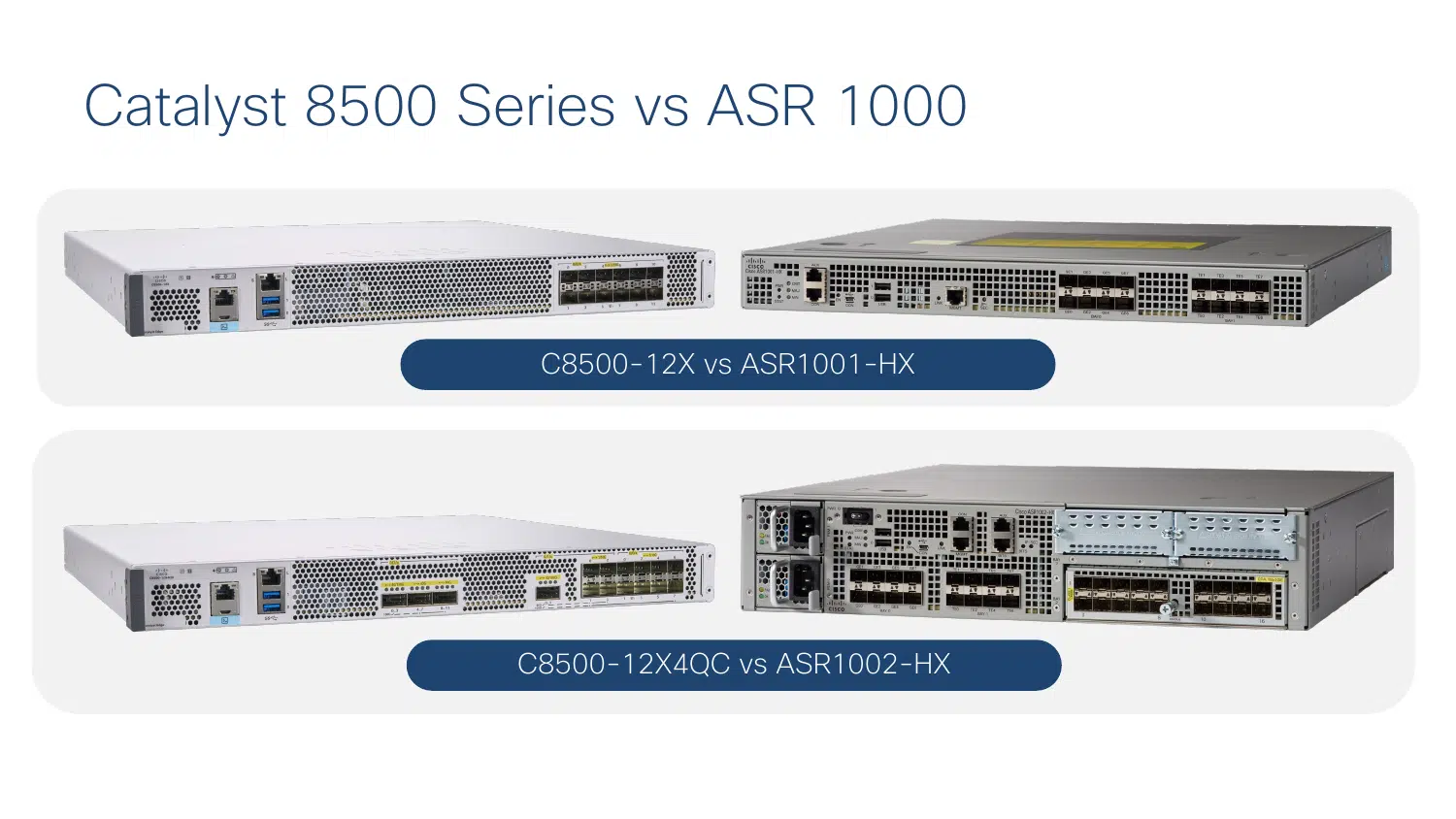
This guide compares the major pairings buyers usually evaluate: C8500-12X4QC vs ASR1002-HX, C8500-12X vs ASR1001-HX, and C8500L-8S4X vs ASR1001-X. It also explains how to compare Catalyst 8500 models against each other, where the 8500L fits, which scale numbers matter in SD-WAN or autonomous IOS XE deployments, and what procurement teams should verify before ordering.
Quick Answer: Catalyst 8500 vs ASR 1000
For most new WAN edge and SD-WAN edge projects, start with the Cisco Catalyst 8500 family rather than a new ASR 1000 purchase. The C8500-12X4QC is the natural comparison point for ASR1002-HX-class deployments, the C8500-12X aligns with many ASR1001-HX refreshes, and the C8500L-8S4X is the lighter option often compared with ASR1001-X. Existing ASR platforms can still be retained when they meet the site’s current scale, module, and support requirements.
| Buyer question | Short answer | What to verify before ordering |
|---|---|---|
| What should replace ASR1002-HX? | Evaluate C8500-12X4QC first for high-scale WAN edge and SD-WAN edge designs. | 100G/40G interface plan, SD-WAN scale, crypto throughput, memory, optics, and license tier. |
| What should replace ASR1001-HX? | Evaluate C8500-12X first when you need a 1RU edge platform with higher SD-WAN and crypto headroom. | 1G/10G port needs, autonomous vs SD-WAN mode, software subscription, and transition timing. |
| What should replace ASR1001-X? | Evaluate C8500L-8S4X when the site needs a lighter Catalyst 8500 edge platform. | SD-WAN tunnel scale, 10G port count, route scale, NAT/session requirements, and growth headroom. |
| Should I buy ASR 1000 or Catalyst 8500 for a new project? | For new edge and SD-WAN projects, Catalyst 8500 is usually the more current platform direction. | Confirm current Cisco lifecycle status, software support, licensing, and the exact Bill of Materials. |
Catalyst 8500 Series vs ASR 1000 Series Model Mapping
The cleanest way to compare these platforms is to start with model mapping, then move into the actual decision factors. A C8500 platform is not selected only by its name. The correct replacement path depends on throughput, scale, ports, application hosting needs, encryption requirements, and how the device will be managed.
| Existing or comparison ASR platform | Common Catalyst 8500 comparison | Best-fit situation |
|---|---|---|
| ASR1002-HX | C8500-12X4QC | High-capacity WAN edge, SD-WAN aggregation, larger tunnel and route scale, and 40G/100G planning. |
| ASR1001-HX | C8500-12X | 1RU edge refresh where the buyer wants a Catalyst 8500 platform with higher SD-WAN and crypto scale than ASR1001-HX-class deployments. |
| ASR1001-X | C8500L-8S4X | Lighter edge routing and SD-WAN deployments where a full C8500-12X or C8500-12X4QC is not required. |
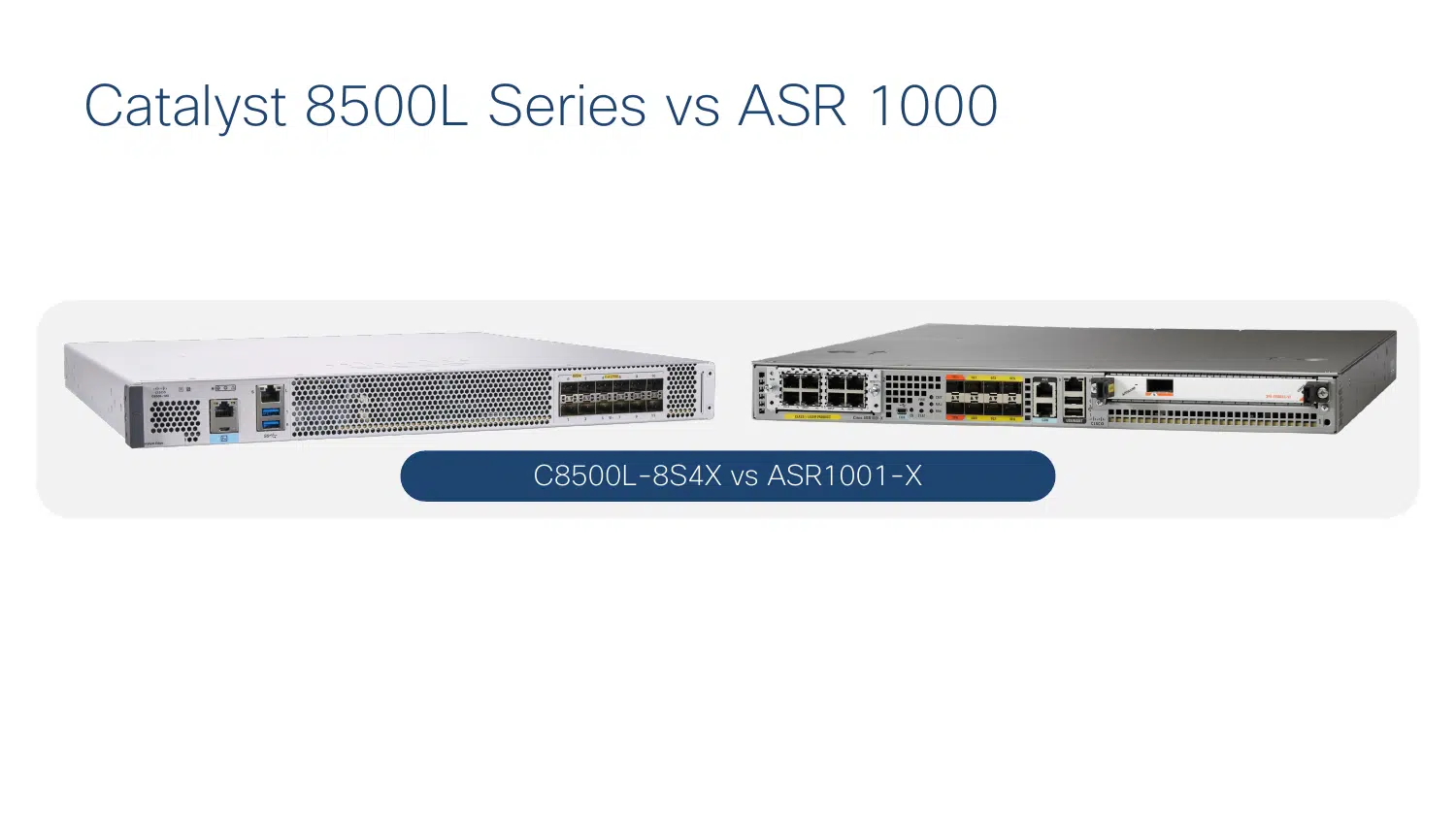
Use these mappings as a starting point, not as an automatic substitute list. A migration from ASR1001-X to C8500L-8S4X can be clean for some sites, but it should still be checked against the current interface plan, NAT/session scale, SD-WAN tunnel count, routing table size, redundancy model, and support expectations. If you are sourcing units, the full range sits in the Cisco Catalyst 8500 Series Edge Platforms category.
C8500-12X4QC vs ASR1002-HX
Choose C8500-12X4QC over ASR1002-HX when the site needs a newer high-scale edge platform with stronger SD-WAN headroom, higher aggregate throughput, and built-in high-speed port flexibility. ASR1002-HX can remain useful in installed environments, but new or refreshed designs should evaluate the C8500-12X4QC first.
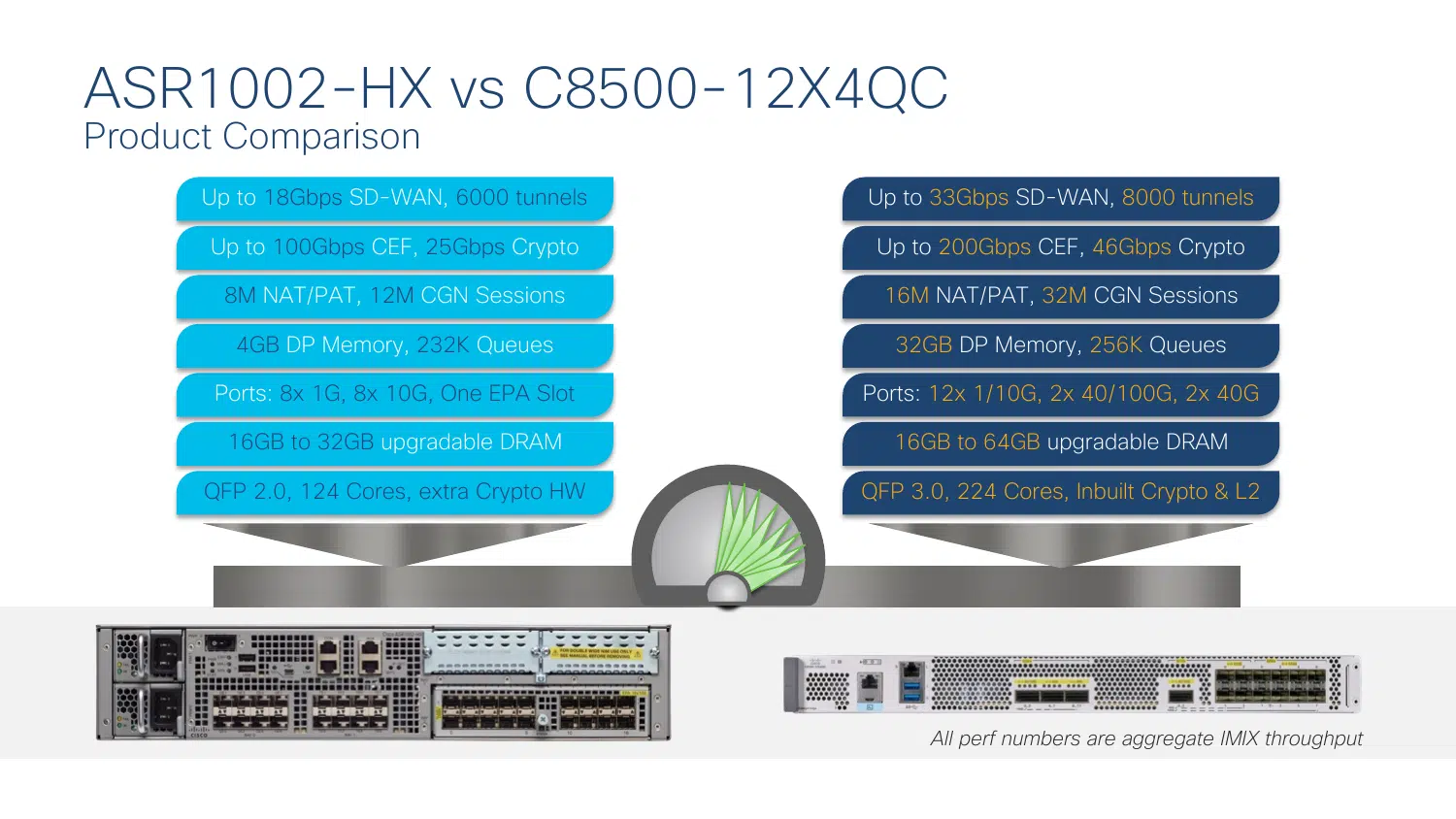
| Decision factor (IMIX) | ASR1002-HX | C8500-12X4QC | Buying implication |
|---|---|---|---|
| SD-WAN throughput / tunnels | Up to 18 Gbps, 6000 tunnels | Up to 33 Gbps, 8000 tunnels | More SD-WAN headroom for larger edge or aggregation roles. |
| CEF throughput | Up to 100 Gbps | Up to 200 Gbps | Higher aggregate forwarding capacity. |
| Crypto throughput | Up to 25 Gbps | Up to 46 Gbps | Important for encrypted WAN, site-to-site, and secure edge designs. |
| NAT/PAT; CGN sessions | 8M NAT/PAT; 12M CGN | 16M NAT/PAT; 32M CGN | Matters for internet breakout and large-scale address translation. |
| DP memory; queues | 4 GB; 232K | 32 GB; 256K | Higher data-plane scale headroom. |
| Ports | 8x 1G, 8x 10G, one EPA slot | 12x 1/10G, 2x 40/100G, 2x 40G | C8500-12X4QC has built-in high-speed WAN ports without an expansion module. |
| DRAM | 16 GB to 32 GB upgradable | 16 GB to 64 GB upgradable | More control-plane headroom for route scale and services. |
| Data plane | QFP 2.0, 124 cores, extra crypto HW | QFP 3.0, 224 cores, inbuilt crypto & L2 | Newer third-generation data plane on the C8500-12X4QC. |
The main reason to choose C8500-12X4QC is not only raw throughput. Look at the full edge design: high-speed WAN links, SD-WAN tunnel growth, encryption, service chaining, route scale, and whether the site will continue in autonomous IOS XE mode or move into a controller-based SD-WAN operating model.
Who should choose C8500-12X4QC?
- Large branches, regional hubs, campus edge sites, and WAN aggregation sites that need higher forwarding and encryption headroom.
- Deployments planning for 40G or 100G connectivity at the edge.
- SD-WAN environments where tunnel scale, DPI flows, and route scale are part of the design.
- ASR1002-HX refresh projects where retaining the older platform would limit growth or support planning.
When should ASR1002-HX still be retained?
ASR1002-HX can still be retained when it is already installed, supported, correctly licensed, and comfortably meets the site’s current traffic, module, and service requirements. Replacement becomes more compelling when support status, software strategy, encryption scale, WAN speed, or SD-WAN migration makes the legacy platform a constraint.
C8500-12X vs ASR1001-HX
C8500-12X is the stronger starting point for many ASR1001-HX refreshes when the buyer wants a current 1RU Catalyst edge platform with higher SD-WAN and crypto headroom. It is especially relevant where the site needs 12 built-in 1/10G ports, higher NAT/PAT scale, and a cleaner Catalyst 8000 software direction. For sourcing, see the C8500-12X and ASR1001-HX product pages.
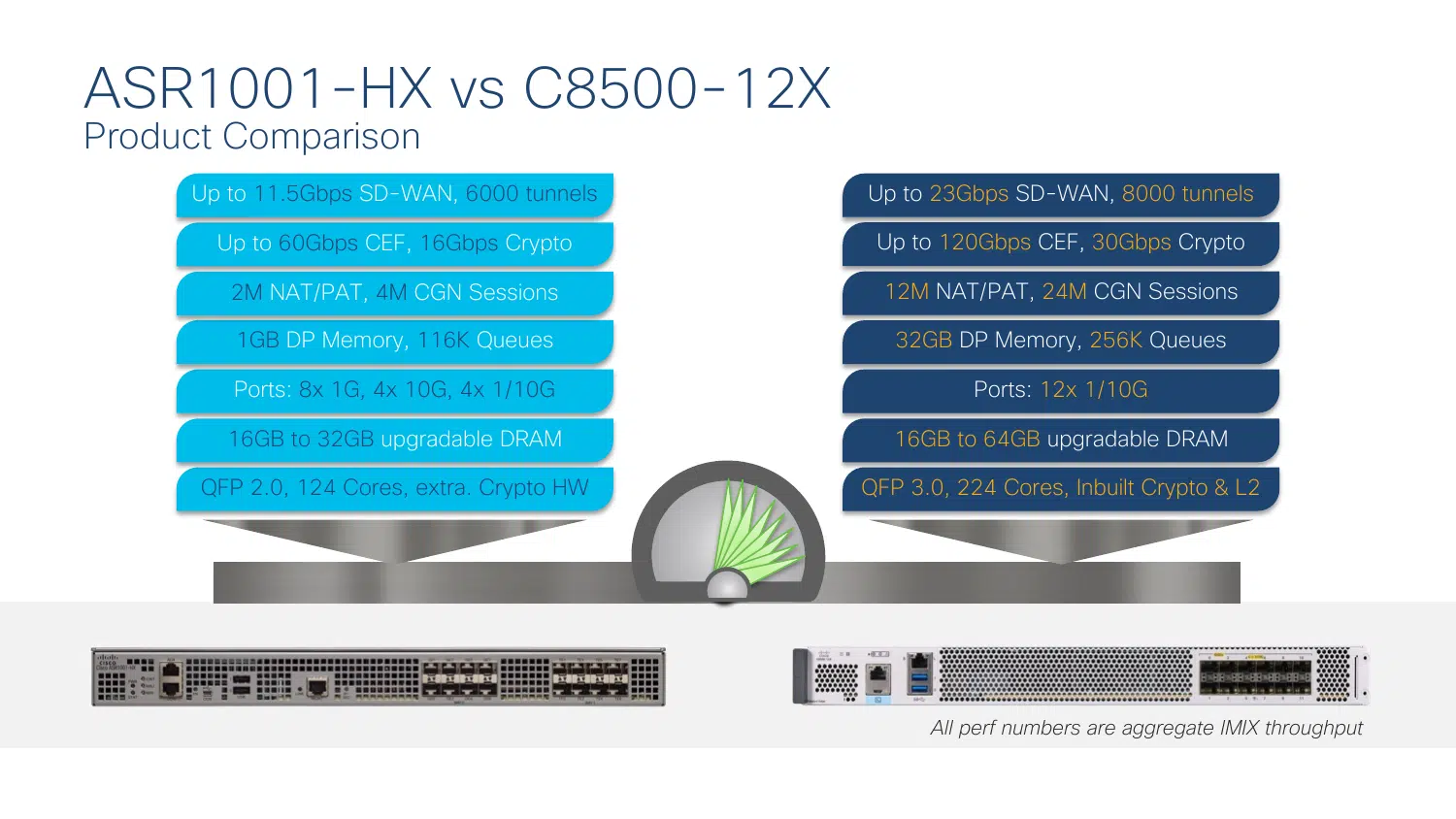
| Decision factor (IMIX) | ASR1001-HX | C8500-12X | Buying implication |
|---|---|---|---|
| SD-WAN throughput / tunnels | Up to 11.5 Gbps, 6000 tunnels | Up to 23 Gbps, 8000 tunnels | C8500-12X better fits growing SD-WAN deployments. |
| CEF throughput | Up to 60 Gbps | Up to 120 Gbps | C8500-12X gives more forwarding headroom for edge refreshes. |
| Crypto throughput | Up to 16 Gbps | Up to 30 Gbps | C8500-12X is stronger for encrypted WAN and secure edge workloads. |
| NAT/PAT; CGN sessions | 2M NAT/PAT; 4M CGN | 12M NAT/PAT; 24M CGN | Large session-scale increase for translation-heavy designs. |
| DP memory; queues | 1 GB; 116K | 32 GB; 256K | Much larger data-plane scale on the C8500-12X. |
| Ports | 8x 1G, 4x 10G, 4x 1/10G | 12x 1/10G | Check whether the deployment needs flexible 1/10G edge connectivity or ASR module choices. |
| DRAM | 16 GB to 32 GB upgradable | 16 GB to 64 GB upgradable | Memory headroom matters in route scale, services, and software planning. |
| Data plane | QFP 2.0, 124 cores, extra crypto HW | QFP 3.0, 224 cores, inbuilt crypto & L2 | Newer third-generation data plane on the C8500-12X. |
C8500-12X is usually a cleaner fit than C8500L-8S4X when the site needs a true high-performance 1RU edge platform. If the site is a smaller branch or a lighter SD-WAN edge, C8500L-8S4X may be enough. If the site needs 40G or 100G edge interfaces, C8500-12X4QC becomes the more natural platform.
Who should choose C8500-12X?
- ASR1001-HX refresh projects where 1RU form factor matters.
- Sites that need more SD-WAN scale and encryption headroom than a lighter 8500L design.
- Deployments built around multiple 1/10G WAN, LAN, or service-provider handoffs.
- Buyers who want Catalyst 8000 software direction without moving to the larger C8500-12X4QC.
C8500L-8S4X vs ASR1001-X
C8500L-8S4X is the lighter Catalyst 8500 comparison point for ASR1001-X-class deployments. It can be a strong fit for branch edge and smaller SD-WAN sites, but it should not be treated as a universal replacement for every ASR1001-X deployment without checking scale, route table size, NAT/session requirements, and port requirements.
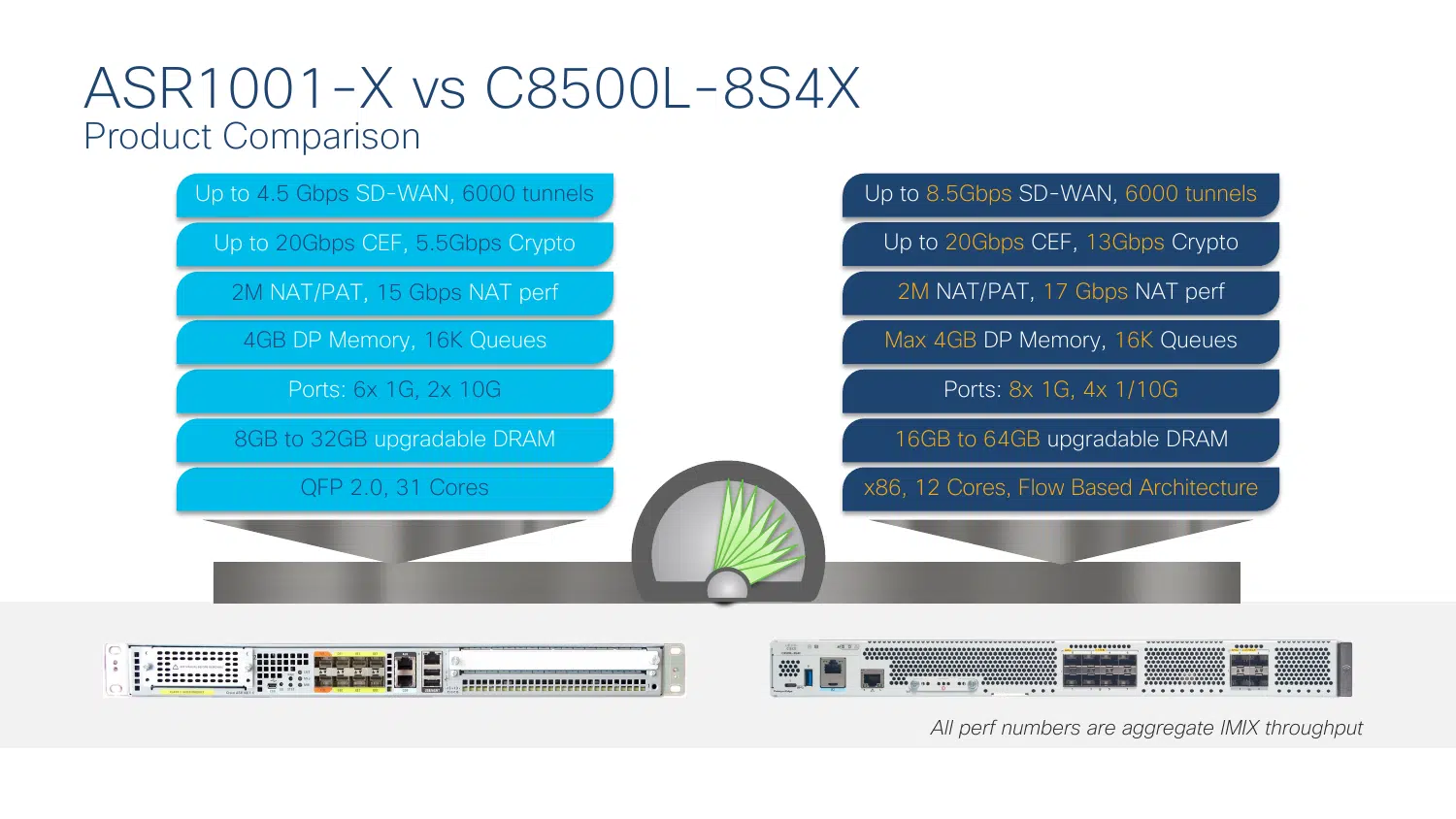
| Decision factor (IMIX) | ASR1001-X | C8500L-8S4X | Buying implication |
|---|---|---|---|
| SD-WAN throughput / tunnels | Up to 4.5 Gbps, 6000 tunnels | Up to 8.5 Gbps, 6000 tunnels | C8500L-8S4X is a better fit for modern SD-WAN edge planning. |
| CEF throughput | Up to 20 Gbps | Up to 20 Gbps | Do not choose on forwarding alone; check crypto, SD-WAN, and scale. |
| Crypto throughput | Up to 5.5 Gbps | Up to 13 Gbps | C8500L-8S4X gives stronger encrypted edge headroom. |
| NAT/PAT; NAT performance | 2M NAT/PAT; 15 Gbps NAT perf | 2M NAT/PAT; 17 Gbps NAT perf | Similar session scale; slightly higher NAT performance on the C8500L. |
| DP memory; queues | 4 GB; 16K | Max 4 GB; 16K | Comparable data-plane memory and queue scale. |
| Ports | 6x 1G, 2x 10G | 8x 1G, 4x 1/10G | C8500L-8S4X provides a strong fixed-port edge profile; verify optics and cabling. |
| DRAM | 8 GB to 32 GB upgradable | 16 GB to 64 GB upgradable | More control-plane memory headroom on the C8500L. |
| Architecture | QFP 2.0, 31 cores | x86, 12 cores, flow-based | Different architectures; direct data-plane-core comparisons are not meaningful. |
C8500L-8S4X should be evaluated as a compact edge platform, not as the automatic answer for every ASR refresh. If the site needs higher service scale, more 10G density, larger route or NAT scale, or more growth headroom, compare C8500L against C8500-12X before ordering.
Catalyst 8500 Model Comparison: C8500-12X4QC vs C8500-12X vs C8500L-8S4X
Before comparing against the ASR 1000, many buyers first need to choose between the Catalyst 8500 models themselves. The three mainstream edge models — C8500-12X4QC, C8500-12X, and C8500L-8S4X — differ in ports, throughput, crypto, and data-plane architecture. The higher-density C8500-20X6C sits above them for aggregation roles.
| Spec (IMIX) | C8500-12X4QC | C8500-12X | C8500L-8S4X |
|---|---|---|---|
| CEF throughput | Up to 200 Gbps | Up to 120 Gbps | Up to 20 Gbps |
| Crypto throughput | Up to 46 Gbps | Up to 30 Gbps | Up to 13 Gbps |
| SD-WAN throughput / tunnels | 33 Gbps / 8000 | 23 Gbps / 8000 | 8.5 Gbps / 6000 |
| NAT/PAT sessions | 16M | 12M | 2M |
| Ports | 12x 1/10G, 2x 40/100G, 2x 40G | 12x 1/10G | 8x 1G, 4x 1/10G |
| Data plane | QFP 3.0, 224 cores | QFP 3.0, 224 cores | x86, 12 cores, flow-based |
| DRAM | 16–64 GB | 16–64 GB | 16–64 GB |
| Form factor | 1RU | 1RU | 1RU |
Above this comparison, the C8500-20X6C is the high-density aggregation model: 20x 1/10GE plus 6x 40/100GE (800 Gbps of port bandwidth), up to roughly 100 Gbps SD-WAN IPsec (IMIX) and 64 GB default DRAM in a 3RU chassis. Consider it when a single C8500-12X4QC cannot carry the aggregation site. All models are in the Cisco Catalyst 8500 Series Edge Platforms.
C8500-12X4QC vs C8500-12X
Choose the C8500-12X4QC when the site needs built-in 40G/100G edge ports and higher aggregate throughput (200 Gbps CEF, 46 Gbps crypto). Choose the C8500-12X when the deployment is built on 1/10G connectivity (120 Gbps CEF, 30 Gbps crypto) and does not need 40G/100G. Both are 1RU with the third-generation QFP and the same 8000-tunnel SD-WAN scale; the difference is high-speed ports and headroom.
C8500-12X vs C8500L-8S4X
Choose the C8500-12X for a true high-performance 1RU edge: 120 Gbps CEF, 30 Gbps crypto, 12M NAT/PAT, and the QFP 3.0 data plane. Choose the C8500L-8S4X for lighter branch and SD-WAN edge sites where 20 Gbps CEF, 13 Gbps crypto, and the x86 flow-based data plane are sufficient. The gap between them is large, so size the site honestly before dropping to the 8500L.
C8500-12X4QC vs C8500L-8S4X
This is the top-versus-entry comparison. The C8500-12X4QC carries roughly ten times the CEF throughput and about 3.5x the crypto of the C8500L-8S4X, plus 40G/100G ports and far higher session scale. Compare these two directly only when you are deciding between a high-scale aggregation edge and a compact branch edge — they target different roles.
Catalyst 8500 vs Catalyst 8500L
The difference between Catalyst 8500 and Catalyst 8500L is the data plane and the target role. The full Catalyst 8500 models (C8500-12X, C8500-12X4QC) use the third-generation Cisco QFP for high forwarding, high crypto, and large session scale. The Catalyst 8500L (C8500L-8S4X) uses an x86, flow-based data plane built to continue the ASR1000 experience for lighter branch and SD-WAN edge sites. Pick 8500 for scale and high-speed ports; pick 8500L for compact, cost-sensitive edge.
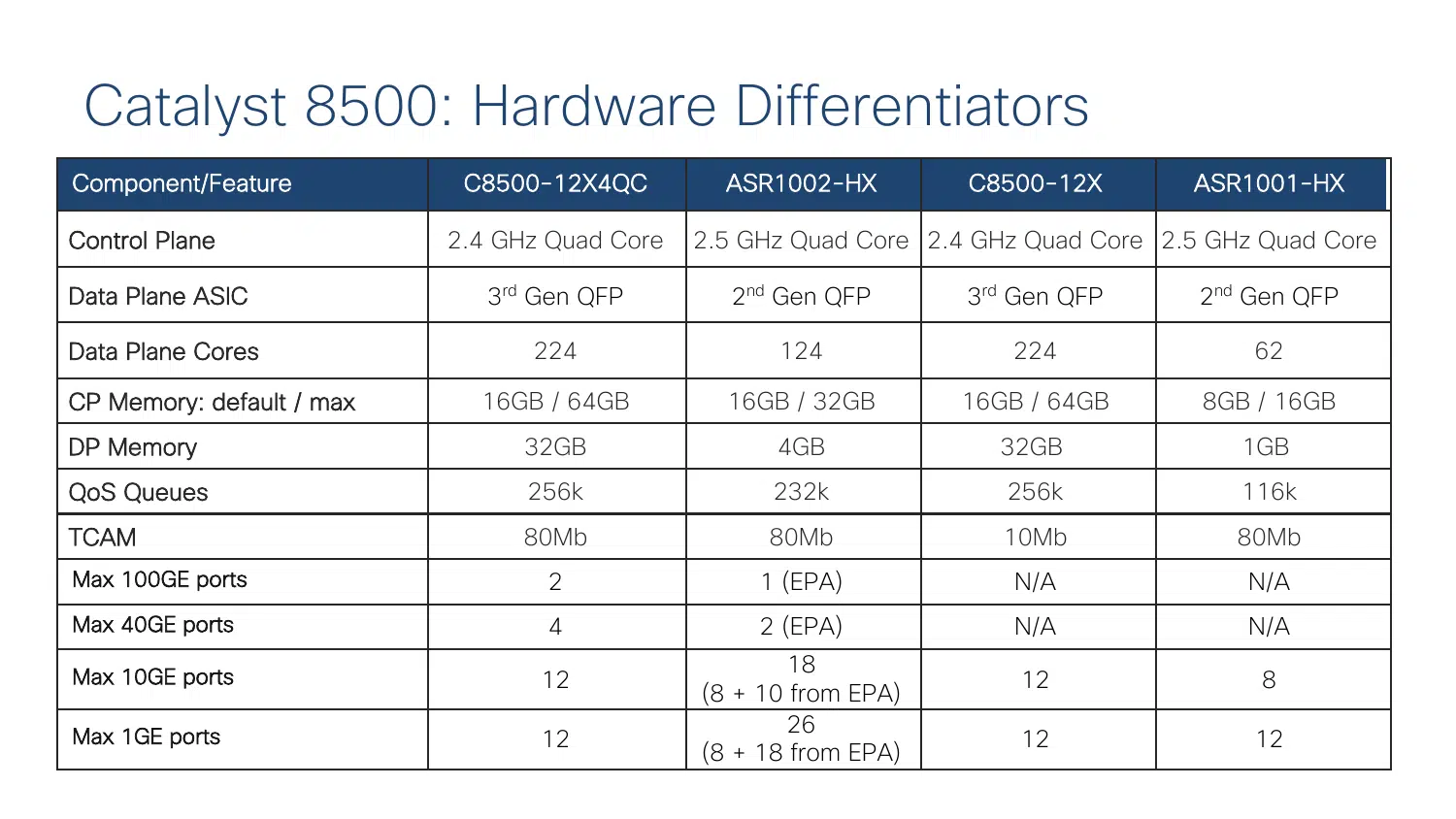
Catalyst 8500 Hardware Comparison
Hardware comparison is where many buying mistakes happen. Port counts, 100G readiness, data-plane memory, queue scale, storage, fan design, and module support all affect the real Bill of Materials. A platform that looks cheaper on the first quote can become wrong if it needs external changes, optic changes, or a redesign of the WAN handoff.
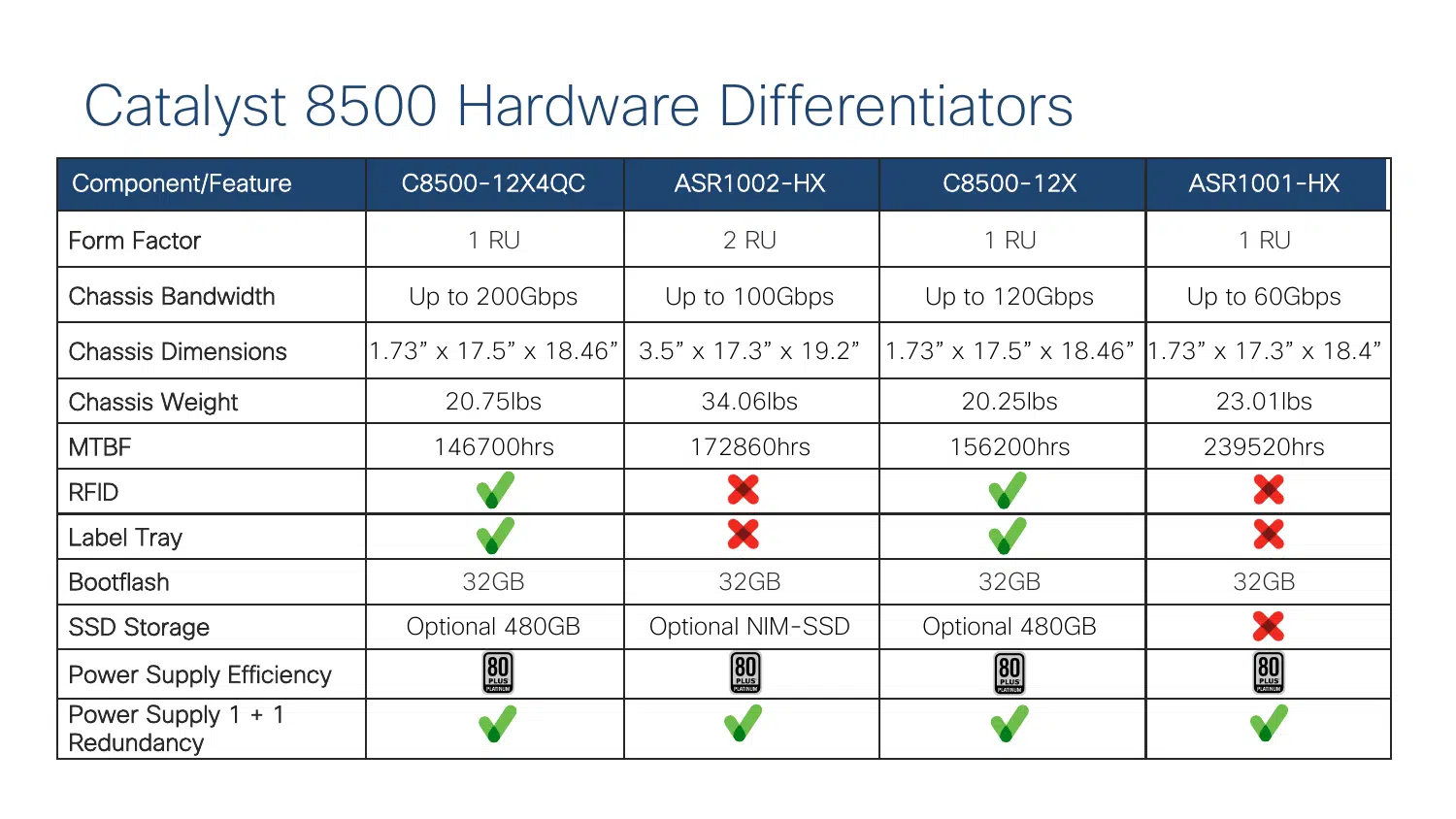
| Hardware factor | C8500-12X4QC | ASR1002-HX | C8500-12X | ASR1001-HX |
|---|---|---|---|---|
| Form factor | 1RU | 2RU | 1RU | 1RU |
| CEF throughput (IMIX) | Up to 200 Gbps | Up to 100 Gbps | Up to 120 Gbps | Up to 60 Gbps |
| Data plane | QFP 3.0, 224 cores | QFP 2.0, 124 cores | QFP 3.0, 224 cores | QFP 2.0, 124 cores |
| DRAM | 16–64 GB | 16–32 GB | 16–64 GB | 16–32 GB |
| Procurement note | Check high-speed optics and power supply. | Check EPA/NIM dependency. | Check 1/10G port plan. | Check support and refresh timing. |
Catalyst 8500L Hardware Comparison
The 8500L family should be evaluated on its own terms. It is not simply a lower-cost version of every C8500 model. It serves lighter edge deployments where the port profile, SD-WAN scale, and route scale align with the site design.
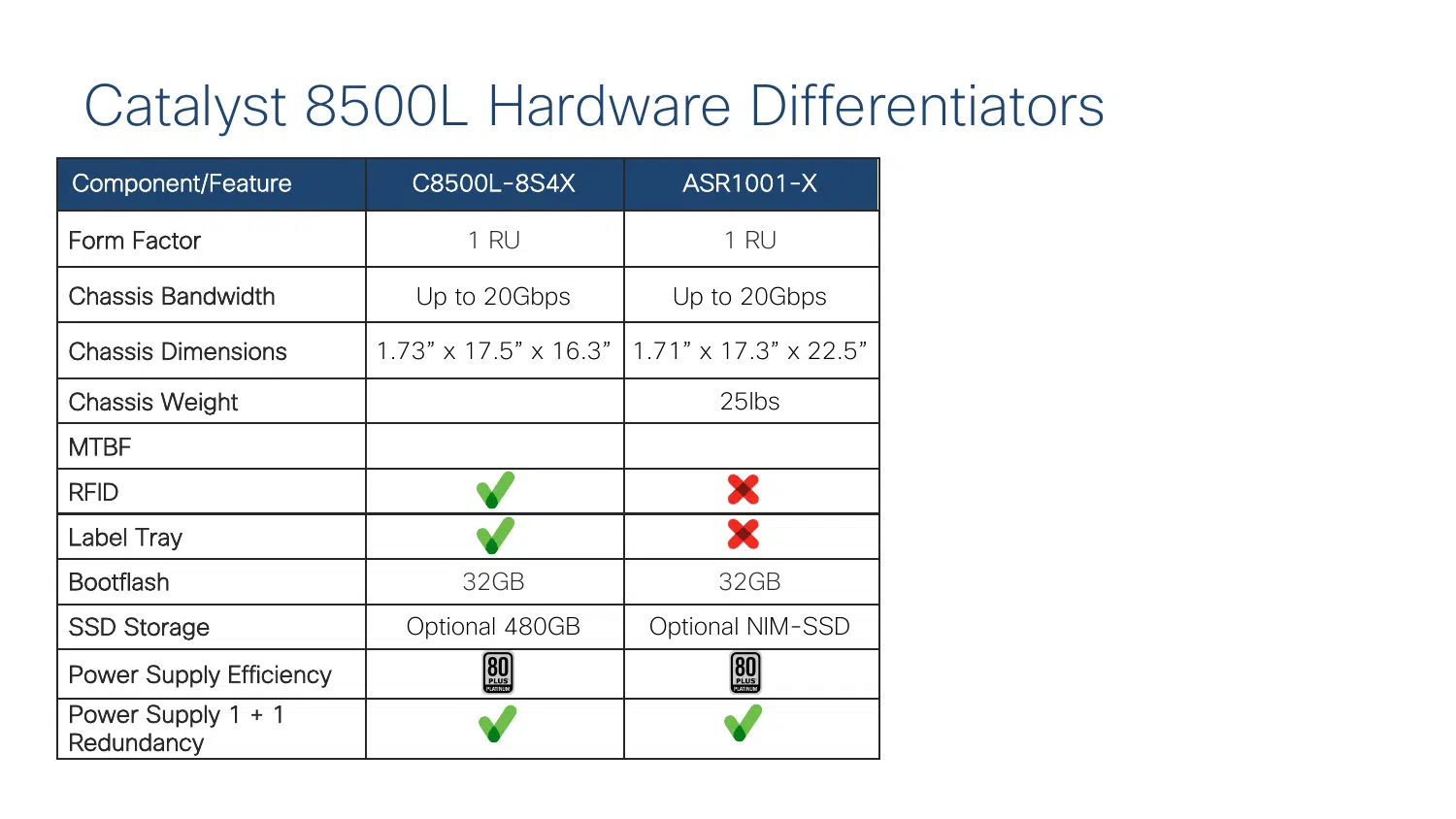
| Factor (IMIX) | C8500L-8S4X | ASR1001-X | Buyer takeaway |
|---|---|---|---|
| Form factor | 1RU | 1RU | Both fit compact rack deployments. |
| CEF throughput | Up to 20 Gbps | Up to 20 Gbps | Look beyond the headline number; compare crypto, SD-WAN, and session scale. |
| Crypto throughput | Up to 13 Gbps | Up to 5.5 Gbps | C8500L carries more encrypted-edge headroom. |
| Ports | 8x 1G, 4x 1/10G | 6x 1G, 2x 10G | C8500L-8S4X is attractive where fixed 1/10G edge ports are enough. |
| Architecture | x86, 12 cores, flow-based | QFP 2.0, 31 cores | Different architectures; check the interface and cabling plan before choosing. |
Catalyst 8500 SD-WAN Scale Comparison
SD-WAN scale numbers should be interpreted in the context of the deployment. A regional hub, large branch, and service-provider managed edge do not stress the same part of the platform. IPsec and GRE overlay tunnels, DPI flows, OMP routes, NAT sessions, and firewall sessions all point to different operational limits.
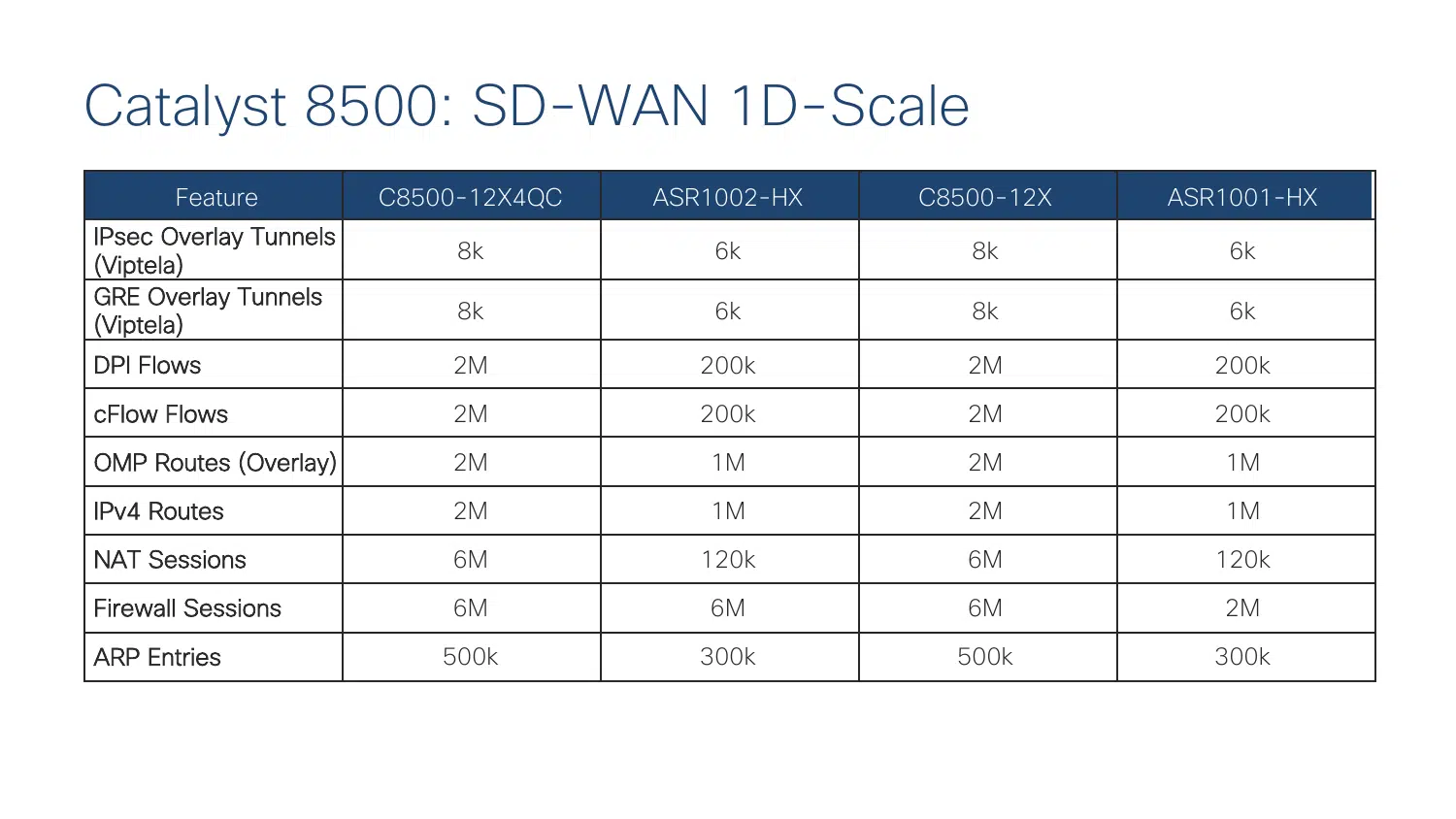
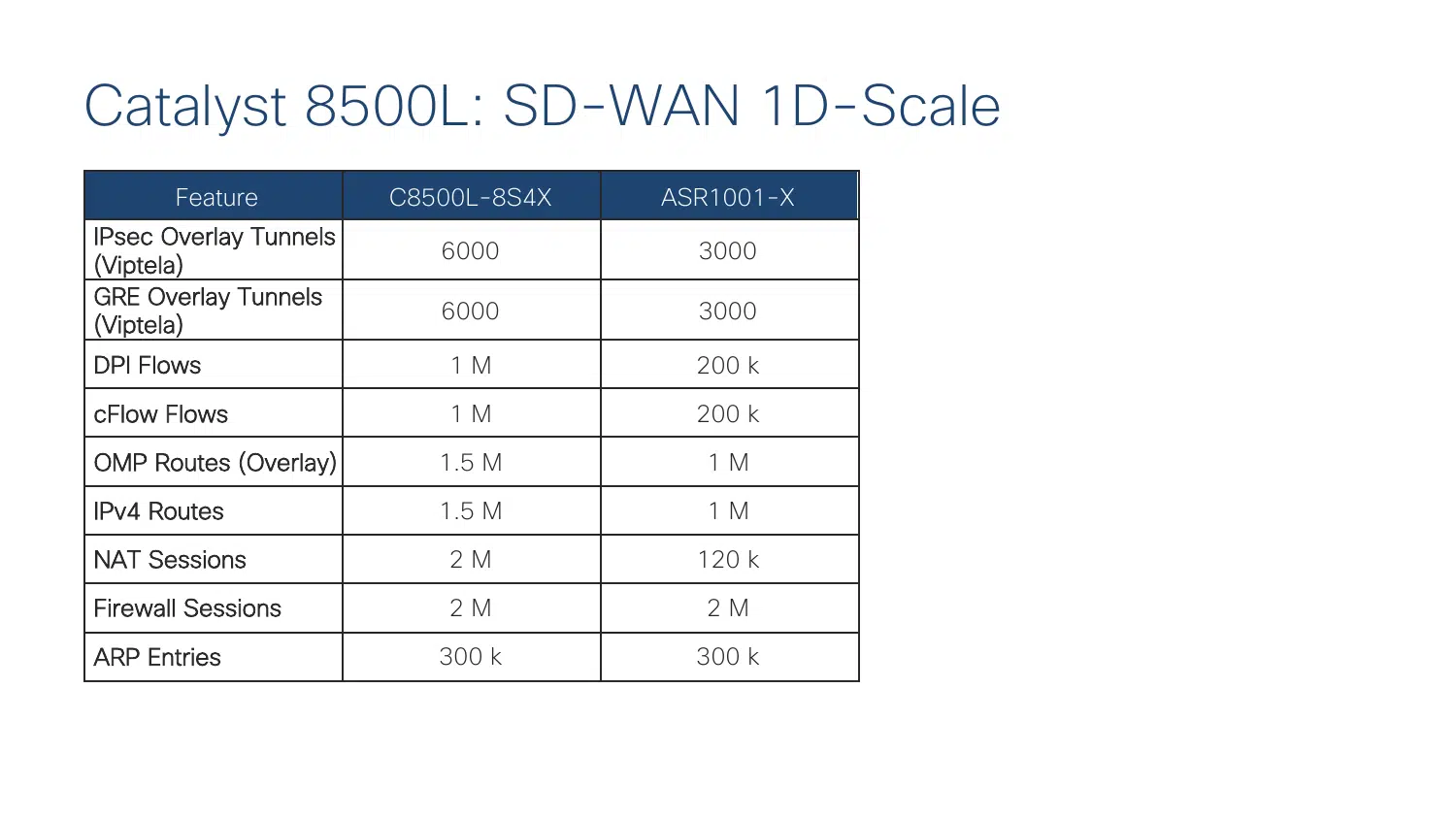
For a buyer, the most useful question is not “Which platform has the biggest number?” but “Which number will become the bottleneck in this network?” A site with many branches may care about tunnels and OMP scale. A site doing internet breakout or large-scale address translation may care more about NAT sessions. A secure edge design may care about encrypted throughput and firewall sessions. Confirm the exact figures for your software release in the SD-WAN scale image above and the current Cisco datasheet.
Catalyst 8500 IOS XE Scale Comparison
Autonomous IOS XE deployments often stress a different set of limits from SD-WAN deployments. Route scale, NAT/PAT sessions, CGN sessions, FlexVPN tunnels, IPsec tunnels, and ARP entries can matter more than SD-WAN tunnel counts. This section is especially relevant for buyers replacing ASR routers in traditional edge routing designs.
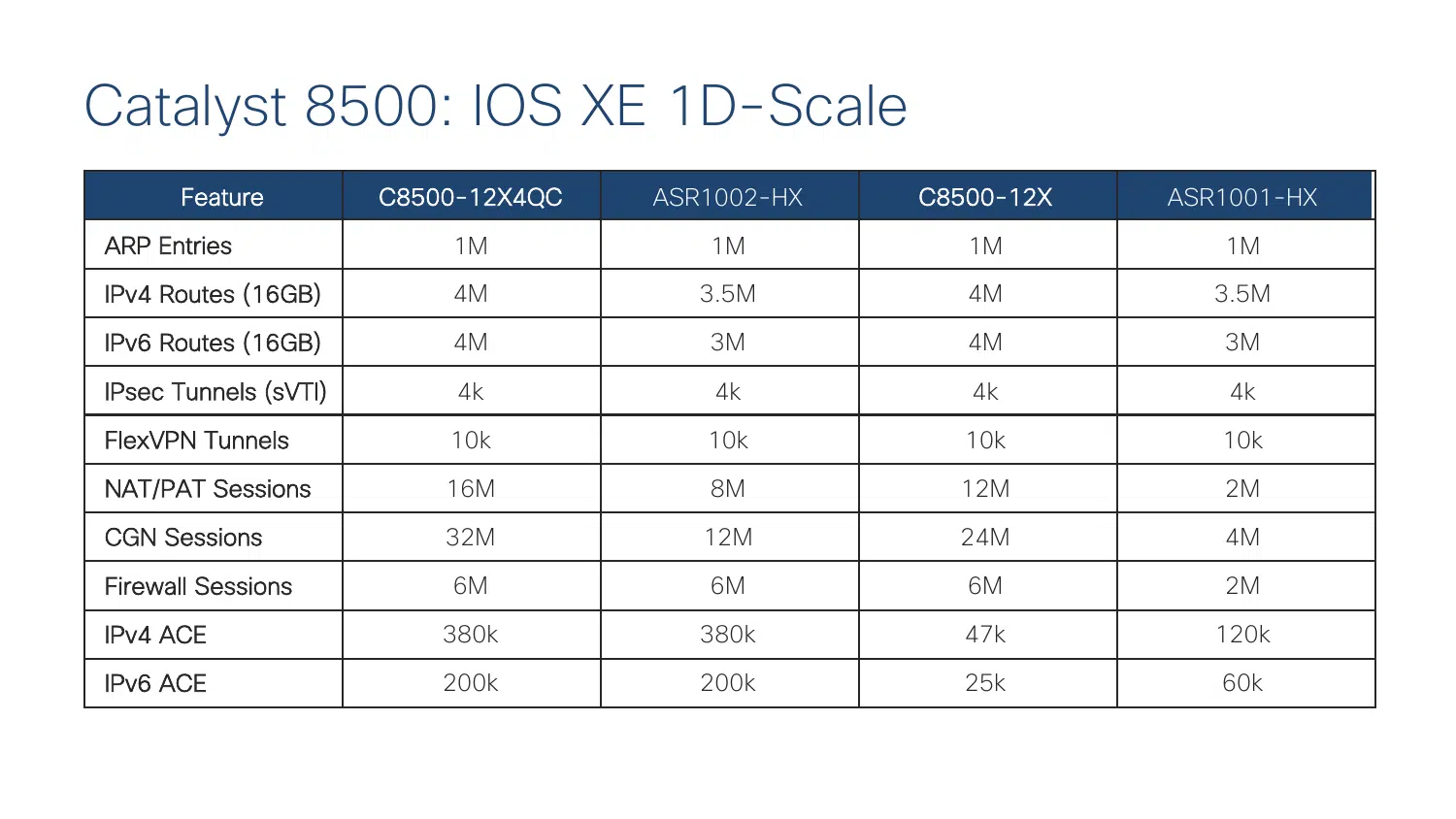
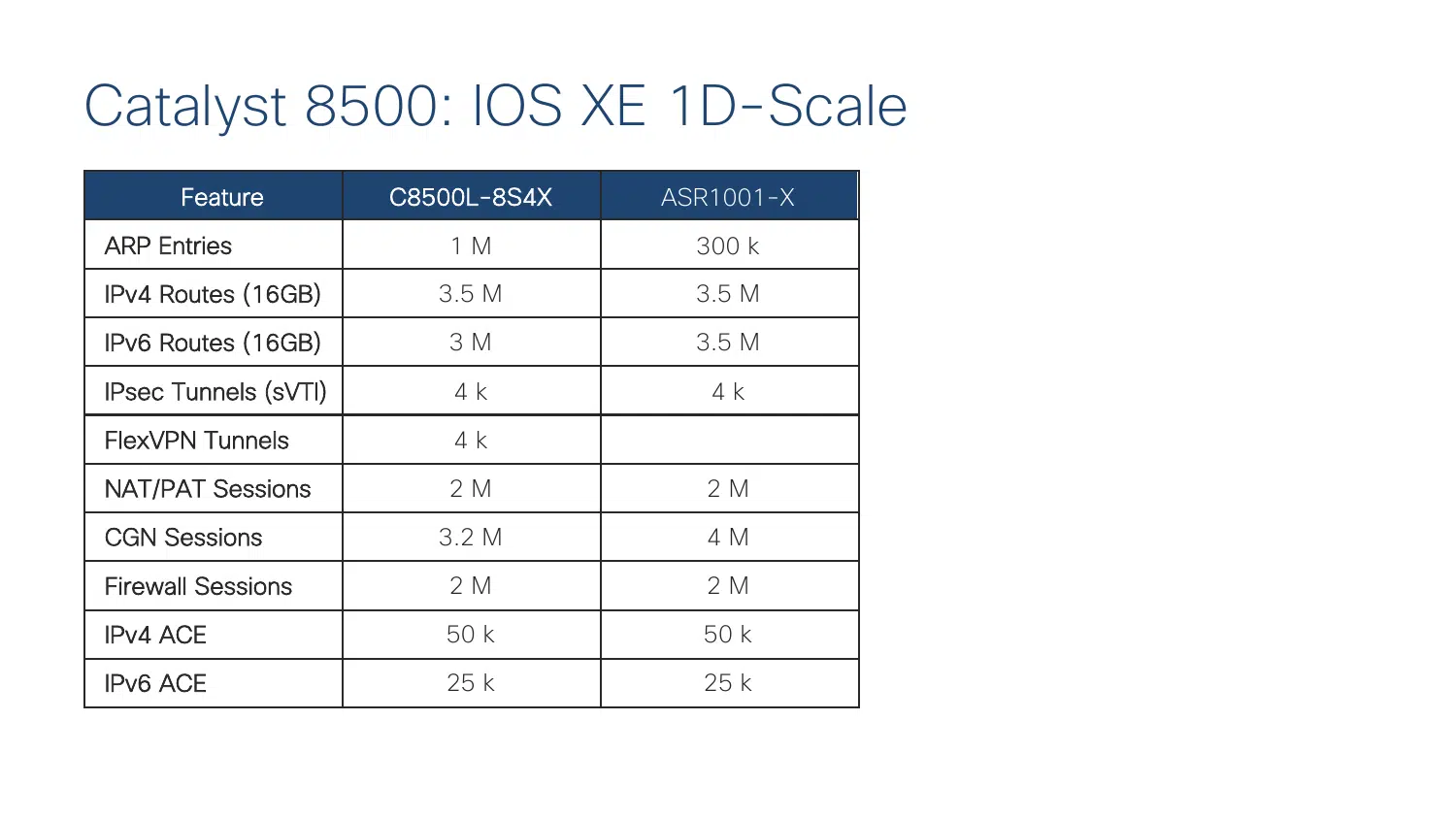
These scale values are valuable for planning, but they should not be treated as a substitute for design validation. Always check the target IOS XE release, license tier, feature combination, and Cisco documentation for the exact deployment mode. Features enabled together can affect practical scale, and production networks should be sized with headroom rather than designed to run at the edge of a published maximum.
Which Catalyst 8500 Model Should You Buy?
For procurement, the best choice is the lowest platform that comfortably satisfies the design with growth margin. Buying too small creates refresh pressure. Buying too large wastes budget and may complicate the BOM.
| Choose this model | Best fit | Avoid it when |
|---|---|---|
| C8500-12X4QC | High-scale edge, 40G/100G planning, ASR1002-HX-class refresh, larger SD-WAN or secure edge deployments. | The site only needs a small number of 1/10G interfaces and moderate scale. |
| C8500-12X | 1RU edge refresh, ASR1001-HX-class comparison, stronger 1/10G WAN edge, and medium to high SD-WAN scale. | The site needs 40G/100G built-in ports or only a lighter branch edge platform. |
| C8500L-8S4X | Lighter edge, ASR1001-X-class comparison, branch SD-WAN, compact edge deployments. | The site needs higher service scale, more growth margin, or high-speed WAN interfaces beyond the 8500L profile. |
Broader routing options are in the Cisco routers, and the full edge range — including the higher-density C8500-20X6C — is in the Cisco Catalyst 8500 Series Edge Platforms.
Catalyst 8500 Migration and Buying Checklist
Before replacing ASR 1000 hardware with Catalyst 8500 hardware, prepare a BOM review that covers both engineering and procurement details. This is where many edge projects avoid wrong-port, wrong-license, or wrong-accessory mistakes.
- Confirm the exact source platform. ASR1001-X, ASR1001-HX, and ASR1002-HX are different design points.
- Document current interfaces. Include 1G, 10G, 40G, 100G, copper, fiber, optics, and any module-dependent ports.
- Confirm operating mode. Autonomous IOS XE and controller-based SD-WAN mode have different planning considerations.
- Check encryption requirements. Validate IPsec, MACsec, secure edge, and any HSEC or license dependencies using current Cisco documentation.
- Check route and session scale. Include IPv4 routes, IPv6 routes, NAT/PAT sessions, CGN sessions, firewall sessions, tunnels, and ARP entries.
- Review software and subscription requirements. Confirm the Cisco software subscription and any DNA / SD-WAN licensing before ordering.
- Verify storage and app-hosting needs. Do not assume SSD or application hosting accessories are included unless they are in the quote.
- Validate rack, power, and airflow. Edge platforms often ship into restricted racks, cabinets, or colocation environments.
- Plan spare units and RMA coverage. If the edge site is business-critical, add spare strategy and replacement timing to the BOM.
- Request a quote with full part numbers. Include chassis, power, optics, cables, subscription term, support, and accessories.
Need help reviewing a Catalyst 8500 or ASR 1000 replacement BOM?

Cisco Catalyst 8500 vs ASR 1000 FAQ
Is Cisco Catalyst 8500 a replacement for ASR 1000?
Catalyst 8500 is commonly evaluated as the newer edge platform path for ASR 1000 refresh projects, especially where SD-WAN, secure edge, higher encryption headroom, or current Catalyst 8000 software direction matters. The right replacement depends on the exact ASR model, scale requirement, interface plan, and license model.
What replaces ASR1002-HX?
C8500-12X4QC is the main Catalyst 8500 comparison point for ASR1002-HX-class deployments. It should be evaluated where high aggregate throughput, higher crypto headroom, high-speed ports, and larger SD-WAN scale are part of the design.
What replaces ASR1001-HX?
C8500-12X is the main Catalyst 8500 comparison point for many ASR1001-HX refreshes. It is a strong fit where the site needs a current 1RU edge platform with 1/10G connectivity and more SD-WAN and crypto headroom than the legacy platform.
What replaces ASR1001-X?
C8500L-8S4X is the common Catalyst 8500L comparison point for ASR1001-X-class deployments. It is best for lighter edge and branch SD-WAN use cases, but buyers should confirm route scale, NAT/session scale, and port requirements before choosing it.
What is the difference between C8500-12X4QC and C8500-12X?
C8500-12X4QC is the higher-end model for deployments that need built-in 40G/100G edge connectivity and greater aggregate headroom. C8500-12X is a strong 1RU edge platform for 1/10G designs and ASR1001-HX-class refreshes.
Should I choose C8500-12X or C8500L-8S4X?
Choose C8500-12X for a high-performance 1RU edge (up to 120 Gbps CEF, 30 Gbps crypto, QFP 3.0) and C8500L-8S4X for lighter branch or SD-WAN edge sites (up to 20 Gbps CEF, 13 Gbps crypto, x86 flow-based). The performance gap is large, so confirm the site’s throughput, crypto, and session scale before dropping to the 8500L.
What is the difference between Catalyst 8500 and Catalyst 8500L?
Catalyst 8500L is the lighter edge platform path, built on an x86 data plane to continue the ASR1000 experience. It can be a good fit for branch and smaller SD-WAN edge sites, while the full Catalyst 8500 models (QFP 3.0) are better for higher-scale edge, high-speed interfaces, and larger growth requirements.
Is Catalyst 8500 a router or a switch?
Catalyst 8500 is an edge platform / edge router family. It belongs to Cisco’s Catalyst 8000 edge platform portfolio, not to the Catalyst campus switching portfolio.
Does Catalyst 8500 support SD-WAN?
Yes, Catalyst 8500 platforms are designed for Cisco SD-WAN edge deployments as well as traditional IOS XE routing use cases, depending on software, licensing, and deployment mode. Always confirm the exact model and software release for the planned feature set.
Which Catalyst 8500 model supports 100G ports?
C8500-12X4QC is the primary model in this comparison with built-in high-speed 40G/100G edge connectivity (2x 40/100G plus 2x 40G). For any current ordering decision, verify the exact port support, optics, and software requirements against the latest Cisco datasheet and ordering guide.
Should I still buy ASR 1000 or migrate to Catalyst 8500?
For a new purchase or planned refresh, Catalyst 8500 is usually the better platform family to evaluate first. For an existing ASR 1000 deployment that is stable, supported, correctly licensed, and not near a scale limit, retention may still be reasonable until the next refresh window.
Official Sources and Verification Notes
The platform-to-platform comparison values in this guide are aggregate IMIX throughput figures from the Cisco Catalyst 8500 platform comparison source. Because IMIX figures differ from the 1400-byte clear-text figures published in some datasheets, and because software support, ordering details, subscriptions, optics, and lifecycle status change over time, verify current product facts against official Cisco documentation before ordering.
- Cisco Catalyst 8500 Series Edge Platforms Data Sheet
- Cisco Catalyst 8500 Series Edge Platforms Ordering Guide
- Cisco ASR 1000 Series Aggregation Services Routers Data Sheet