Cisco Network vs DNA Licensing: How the Two-Layer Cisco Licensing Model Actually Works
Cisco Network licensing and Cisco DNA licensing are not the same thing. In most Catalyst 9000 switch purchases, you are not buying one single software license. You are usually buying a two-layer licensing model: a Network software layer that defines the switch’s base software tier, and a Cisco DNA subscription layer that adds a term-based software and lifecycle model on top.
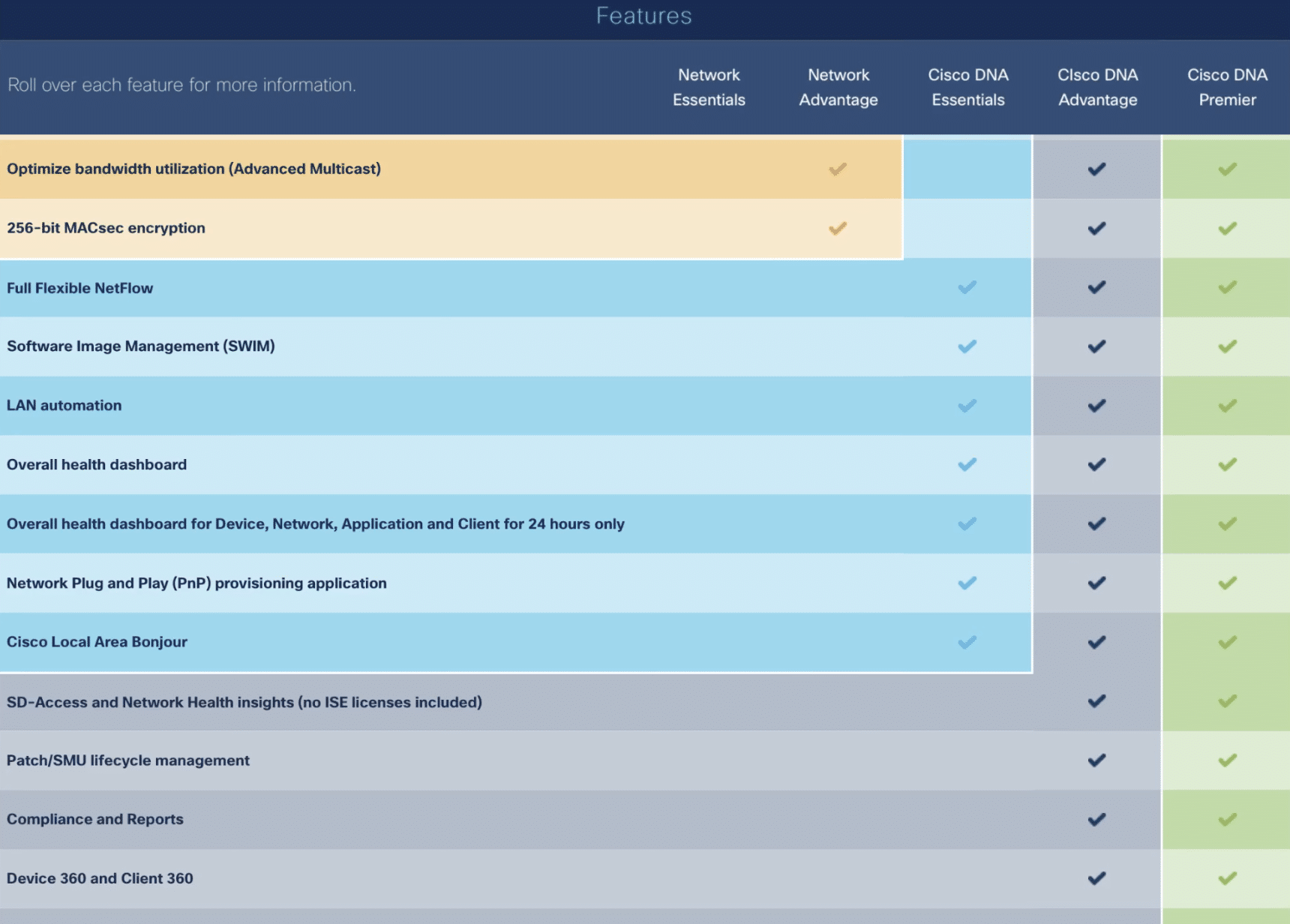
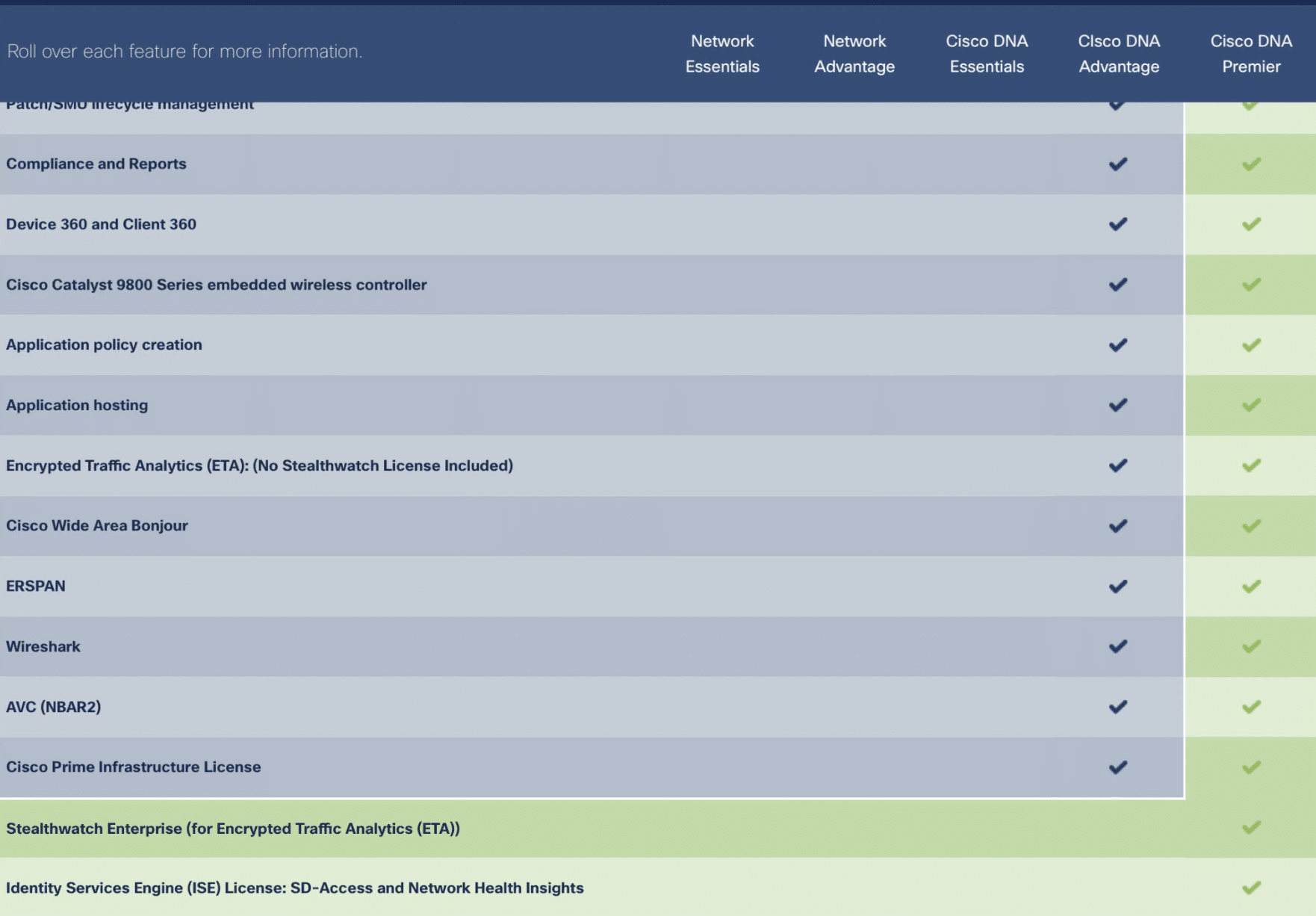
This is where many buyers get confused. They see terms like Network Essentials, Network Advantage, DNA Essentials, and DNA Advantage in the same quote and assume they are all part of one flat software bundle. They are not. The cleanest way to understand a Cisco Catalyst quote is to separate what belongs to the base Network layer from what belongs to the DNA subscription layer.
That distinction matters because it affects:
- how you read a quote
- what stays with the hardware
- what expires later
- how to compare software tiers correctly
- how to avoid paying for the wrong thing for the wrong reason
Short Answer
Cisco Network licensing is the switch’s base software tier, while Cisco DNA licensing is the term-based subscription layer added on top. In a typical Catalyst 9000 quote, both may appear together because you are usually buying hardware + a Network software tier + a DNA subscription term. The Network layer defines the switch’s core software level, while the DNA layer adds subscription-based management, automation, analytics, and lifecycle value.
Cisco Network vs DNA Licensing at a Glance
| Question | Cisco Network Licensing | Cisco DNA Licensing |
|---|---|---|
| What is it? | The switch’s base software tier | The subscription layer on top of the switch software |
| How do buyers usually see it? | In the hardware software tier or SKU structure | As a separate subscription term and software line item |
| Is it the same as the hardware? | No, but it is tightly tied to the switch’s base software level | No, it is an added subscription layer |
| Is it term-based? | Not in the same way as DNA subscription | Yes, usually 3, 5, or 7 years |
| Does it expire? | The base layer is not the same type of expiring subscription question | Yes, the DNA subscription term ends |
| What does it affect? | The switch’s foundational software level | Subscription-based software value, lifecycle path, and broader platform capabilities |
| What do buyers confuse most often? | They mistake it for the DNA tier | They assume it replaces the Network layer |
If you only remember one thing, remember this:
Network and DNA are two layers in the same buying structure, not two names for the same license.

Why So Many Buyers Misread Cisco Quotes
Most people are not really asking a licensing theory question. They are asking a practical buying question:
- Why does my quote show more than one software layer?
- Why is there a Network tier and a DNA tier?
- What is permanent and what is term-based?
- What stays with the switch and what expires later?
The confusion gets worse because Cisco hardware, software, and subscription terms often appear together on the same quote. A buyer may see:
- a hardware SKU ending in
-Eor-A - a DNA subscription line
- a term such as 3 years or 5 years
- Smart Account references
Then they assume all of those items describe the same thing.
They do not.
That is why this page focuses on structure, not feature comparison. If your real question is which DNA tier you should choose, go to the dedicated comparison page instead of trying to solve that from a structure article.
The Two-Layer Cisco Licensing Model for Catalyst Switches
The easiest way to understand modern Cisco campus switching licenses is to separate the software stack into two layers.
Layer 1: Cisco Network Licensing
The first layer is the Network software tier attached to the switch platform.
This is the base software level for the switch itself. In real buying conversations, this is usually where buyers encounter terms such as:
- Network Essentials
- Network Advantage
These are not DNA subscription tiers. They are the base software tiers of the switch platform.
This matters because many buyers jump into DNA questions before they have even confirmed the correct underlying Network level.
Layer 2: Cisco DNA Licensing
The second layer is the Cisco DNA subscription.
This is the term-based layer added on top of the switch’s base software stack. It is usually purchased for a fixed period, such as three, five, or seven years.
This is the part that creates questions like:
- Is DNA mandatory?
- What does DNA actually add?
- What happens when the subscription expires?
- Do we really need this subscription for our project?
Those are valid questions, but they belong to the DNA layer, not the base Network layer.
What the Network Layer Actually Covers
The Network layer is the switch’s core software tier.
For buyers, this is usually the layer that answers questions like:
- Is this switch being quoted at the Essentials or Advantage level?
- What is the base software level tied to this hardware?
- Are we looking at the right switch software foundation before we talk about subscriptions?
This is why hardware SKU suffixes matter so much in Catalyst switching. In many quotes, the base switch variant already signals which base software level is attached to the hardware.
In simple terms:
the Network layer is the switch’s software foundation
What the DNA Layer Actually Covers
The DNA layer is the subscription framework on top of that foundation.
This is the part buyers usually notice later, because it creates lifecycle and planning questions:
- How long is the term?
- What happens when it expires?
- What does the business lose if it is not renewed?
- Is the organization actually using what the subscription adds?
The key point is simple:
DNA is not the same thing as the Network tier. It is the subscription layer added on top of it.
Why a Cisco Quote Can Show Both Network and DNA Licensing
This is one of the most important practical points in the entire topic.
A Cisco quote can show both because the switch purchase is not built around only one software layer. In many real Catalyst purchases, the quote reflects:
- the hardware platform
- the Network software tier
- the DNA subscription term
That is why you should stop thinking of the quote as “hardware plus one license.” In many cases, it is more accurate to read it as:
hardware + base software layer + subscription layer
Once you understand that, Cisco quotes become much easier to review.
Perpetual vs Subscription: Where the Real Line Is
If you want the shortest possible way to understand Cisco Network vs DNA licensing, it is this:
Network is the base software side of the switch. DNA is the subscription side of the switch.
That is the line that matters.
The confusion usually happens when buyers compare:
- Network Essentials with DNA Essentials
- Network Advantage with DNA Advantage
Those names sound parallel, but they do not belong to the same software layer. One belongs to the base switch software structure. The other belongs to the subscription structure.
That is why the better question is not:
“Which name sounds better?”
The better question is:
“Which software layer am I looking at right now?”
How to Read a Cisco Catalyst Quote Without Getting Lost
If you are reviewing a Cisco switch quote, use this order.
1. Confirm the Hardware Model First
Start with the hardware itself.
Make sure the switch platform is correct for:
- port count
- uplink type
- PoE requirements
- stack role
- campus design role
Do not start with software names before validating the hardware.
2. Confirm the Network Software Tier
Next, identify whether the switch is being quoted with the right base software level.
That is where buyers should confirm whether the hardware and the underlying Network tier actually match the project.
3. Confirm the DNA Subscription Layer
Then review the subscription side:
- which DNA tier is included
- what term length is attached
- whether the project actually needs that subscription scope
- whether the organization understands the future renewal decision
4. Review the Stack Together
Only after those three steps should you decide whether the quote is really correct.
Many buyers skip this step and read the quote as a flat list of part numbers. That is why confusion happens.
Cisco Quote Review Checklist
Before approving a Cisco Catalyst quote, check these four things:
| Checkpoint | What to Verify | Why It Matters |
|---|---|---|
| Hardware model | Ports, uplinks, PoE, platform role | A wrong hardware choice cannot be fixed by software |
| Network tier | Essentials or Advantage at the base layer | This defines the switch’s foundational software level |
| DNA layer | Subscription tier and term | This affects lifecycle, management, and future renewal |
| Overall fit | Whether the whole stack matches the project | Prevents overspending or underbuying |
This checklist is often more useful than reading another generic licensing overview.
Common Mistake: Treating Network and DNA as the Same Thing
This is one of the biggest mistakes in Cisco campus procurement.
Buyers often assume:
- Network Essentials = DNA Essentials
- Network Advantage = DNA Advantage
- one replaces the other
- the quote is simply showing the same thing twice
That is not the right way to read it.
They are related, but they are not interchangeable. One is the base software layer. The other is the subscription layer on top of it.
This distinction becomes especially important later when the business starts asking:
- what happens when DNA expires
- what remains with the switch
- why the switch still works even though the subscription ends
- whether renewal is worth it
Where Cisco DNA Tier Comparison Belongs
This page is not the right place for a deep feature-by-feature DNA tier comparison.
If your real question is:
- What is the difference between DNA Essentials and DNA Advantage?
- Which DNA tier should I choose?
- Is Advantage worth it for my campus project?
read the dedicated comparison guide:
Cisco DNA Essentials vs Advantage
That page is the right place for tier selection. This page is the right place for understanding why both Network and DNA appear in the quote in the first place.
Where Expiration and Renewal Belong
This page should also not become a full expiration article.
If your real question is:
- What happens when the DNA term ends?
- Does the switch still work?
- What changes in management and lifecycle value?
- Should I renew or not?
read the dedicated lifecycle page:
What Happens When Cisco DNA License Expires?
That page is the right place for renewal and expiration decisions. This page should stay focused on the buying structure.
A Practical Example: Why Buyers Misread the Stack
Imagine a buyer reviewing a Catalyst quote for the first time.
They see:
- a switch model ending in
-Eor-A - a Cisco DNA subscription line
- a 3-year or 5-year term
- Smart Account references
Their first reaction is often:
“Why are there two licenses here? Are they duplicates?”
They are not duplicates.
The cleaner way to read the quote is:
- the hardware model defines the switch platform
- the Network tier defines the base software level
- the DNA line defines the subscription layer and term
Once you read it in that order, the structure becomes much clearer.
When This Difference Matters Most
The Network vs DNA distinction matters most in these situations.
When Reviewing a New Cisco Quote
This is where most buyers first notice the two-layer structure.
When Comparing Hardware SKUs
SKU suffixes and associated subscription items can look similar enough to create confusion if the software layers are not separated clearly.
When Planning Renewal
Many teams only realize the difference between Network and DNA when the DNA subscription gets close to expiration.
When Trying to Reduce Cost
This is where mistakes become expensive. A team trying to simplify “the license” may actually be changing the subscription layer while misunderstanding the base Network layer entirely.
What Buyers Should Focus on First
If you want to avoid confusion, ask these four questions in order:
- What hardware am I buying?
- What Network software tier is attached to it?
- What DNA subscription layer is included?
- What happens to that subscription later?
That sequence is much more useful than trying to memorize every Cisco licensing term at once.
FAQ
What is the difference between Cisco Network licensing and Cisco DNA licensing?
Cisco Network licensing is the switch’s base software tier. Cisco DNA licensing is the term-based subscription layer added on top.
Is Cisco DNA the same as Network Advantage?
No. Network Advantage belongs to the base software layer. Cisco DNA is a separate subscription layer.
Why does my Cisco quote show both Network and DNA?
Because many Catalyst purchases use a layered model: hardware, base Network software tier, and DNA subscription term.
Is Cisco DNA a perpetual license?
No. Cisco DNA is usually term-based.
Is this page the right place to compare DNA Essentials and Advantage?
Not in depth. That belongs in a dedicated DNA tier comparison article.
Final Takeaway
If Cisco licensing feels confusing, the easiest fix is to stop thinking of it as one flat software package.
For many Catalyst switch purchases, the structure is simpler than it first looks:
- the hardware defines the platform
- the Network layer defines the base software tier
- the DNA layer defines the subscription tier and term
That is the real meaning of Cisco Network vs DNA licensing.
Once you understand that two-layer model, Cisco quotes become easier to read, software tiers become easier to compare, and renewal questions become easier to plan for later.

Layer23-Switch is a global Cisco supplier helping B2B buyers understand Cisco hardware, software tiers, subscription structure, and quote-stage licensing decisions before placing the wrong order.